24-hour service hotline
0086 18733132385
Send us an email
xrguo@xinhaimining.net

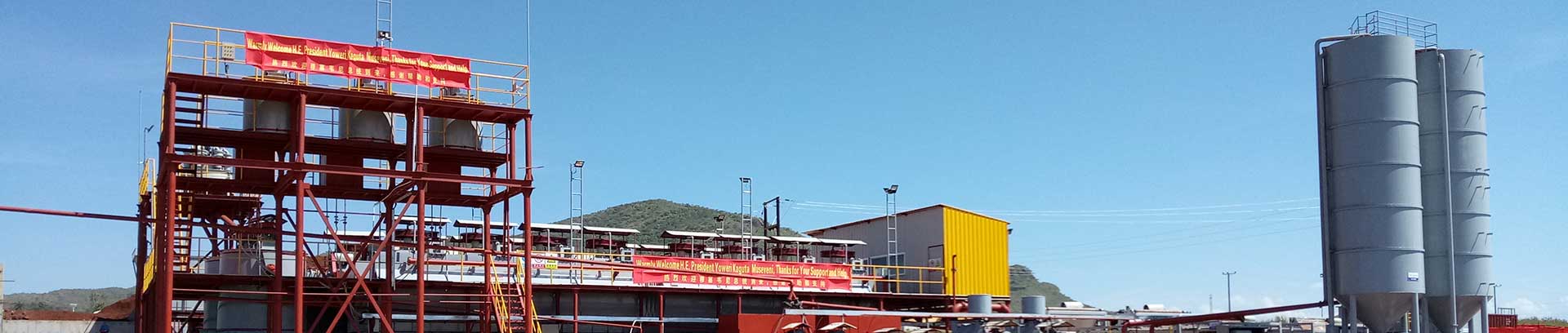
As an important strategic metal mineral, tin ore is widely used in electronics, welding, alloy manufacturing and other fields. It has diverse ore types, mainly divided into placer tin ore and vein tin ore. Different ores have significant differences in characteristics, requiring targeted beneficiation processes to achieve efficient recovery of tin resources.
Gravity separation is the dominant process for placer tin ore beneficiation. Since the density of cassiterite (6.8-7.1g/cm³) in placer tin ore is much higher than that of gangue minerals (e.g., quartz 2.65g/cm³), efficient separation can be achieved by utilizing the density difference. Common equipment includes jigs, shaking tables and spiral chutes: Jigs are suitable for the preconcentration of coarse-grained placer tin ore, separating coarse cassiterite through pulsating water flow; Shaking tables are used for fine-grained purification, enriching cassiterite into rough concentrates by means of inclined water flow and bed vibration; Spiral chutes, with large processing capacity and low energy consumption, are mostly used in large-scale roughing operations of placer tin ore. For some placer tin ores with high mud content, a desliming process (such as hydrocyclone) is required first to remove clay impurities, preventing mud from wrapping cassiterite and affecting separation efficiency.
The beneficiation process of vein tin ore is more complex and requires the coordination of multiple processes. In vein tin ore, cassiterite is often closely associated with sulfide ores (e.g., pyrite, chalcopyrite) and gangue (e.g., quartz, calcite), and the particle size of cassiterite is fine (mostly 0.01-0.1mm), so a combined process of "gravity separation-flotation-magnetic separation" is needed. First, the ore is ground to an appropriate particle size through stage grinding to fully dissociate cassiterite; Then, flotation is used to separate sulfide ores, with xanthate as the collector to float sulfide impurities; Subsequently, gravity separation (such as centrifugal concentrators) is used to enrich cassiterite rough concentrates; If the ore contains magnetic minerals (e.g., magnetite), a magnetic separation step needs to be added to remove magnetic gangue. For vein tin ore with fine disseminated cassiterite, flotation can also be used for direct recovery, with oleic acid as the collector and adjusting the pH value to 8-9 to enhance the separation of cassiterite and gangue.
In addition, tin ore beneficiation should focus on environmental protection and comprehensive utilization of resources. Some tin ores are associated with rare metals such as tungsten, niobium and tantalum, and multi-metal co-recovery can be achieved by optimizing the process; Beneficiation wastewater is recycled after sedimentation and filtration to reduce water consumption; Tailings can be used to fill mining areas, reducing environmental pressure. In the future, tin ore beneficiation will develop in the intelligent direction. Through technologies such as online particle size monitoring and automatic reagent control, separation accuracy and production efficiency will be further improved, contributing to the sustainable development of tin resources.
In the grinding process of metal concentrators, ball mills are the most widely used core equipment, which can be divided into two main types: overflow ball mills and grid-type ball mills according to the ore discharge method.
From ore to gold, the key to efficient recovery lies in scientific mineral processing. Gold flotation, recognized as an efficient gold extraction technology in the industry
© 2021 Yantai KZ Mining Processing Technology & Equipment Inc.