24-hour service hotline
0086 18733132385
Send us an email
xrguo@xinhaimining.net

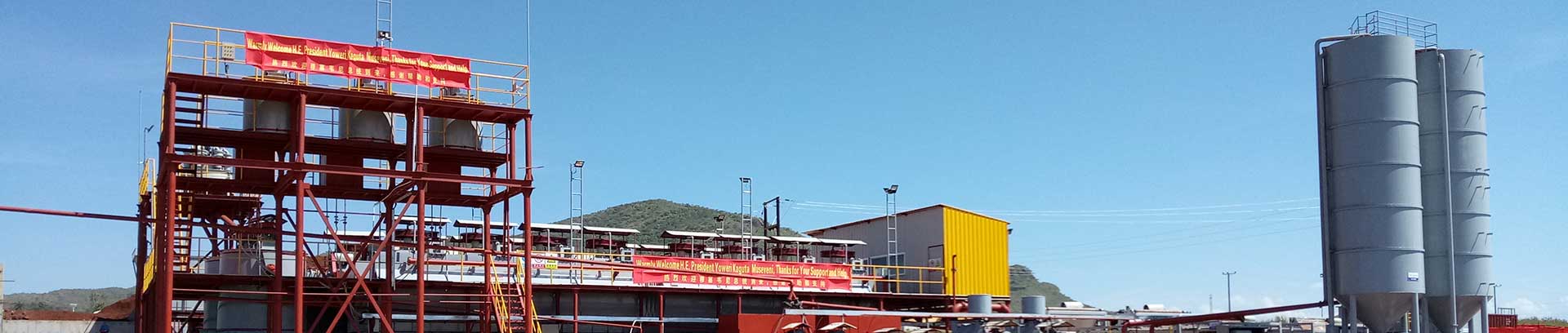
Barite, as an important non-metallic mineral raw material, plays a crucial role in oil drilling, chemical industry, and filler applications. However, the transformation from rough, mined ore to pure concentrate meeting the stringent standards of various industries is not instantaneous. It must undergo a rigorous and efficient modern industrial "selection" process, undergoing three core stages: crushing and grinding, precise sorting, and concentration and dehydration, to achieve its magnificent transformation.
The selection process begins with the "deconstruction" of the raw ore. The mined barite ore varies in size, with the mineral and gangue closely intertwined. The first step is to physically "refine" it through crushing and grinding.
This stage typically uses a jaw crusher for coarse crushing, followed by a cone crusher or impact crusher for medium and fine crushing, reducing the large pieces of ore to the appropriate particle size. The minerals are then ground in a ball mill or rod mill to achieve sufficient individual liberation of barite minerals from gangue minerals such as quartz and calcite. Only with sufficient liberation can a solid foundation be laid for subsequent efficient separation, much like clearing obstacles for a competitor to showcase their individual characteristics.
Once the minerals have been liberated, the most crucial "selection" stage begins – precision separation. Based on the specific properties of the raw ore (such as the type of associated minerals, grain size, and grade), the most economical and effective separation method must be intelligently selected:
Gravity Separation: Utilizing the specific gravity difference between barite and gangue minerals, this is a classic and relatively low-cost method for processing low-grade, coarse-grained disseminated ores. Commonly used equipment includes jigs and shaking tables.
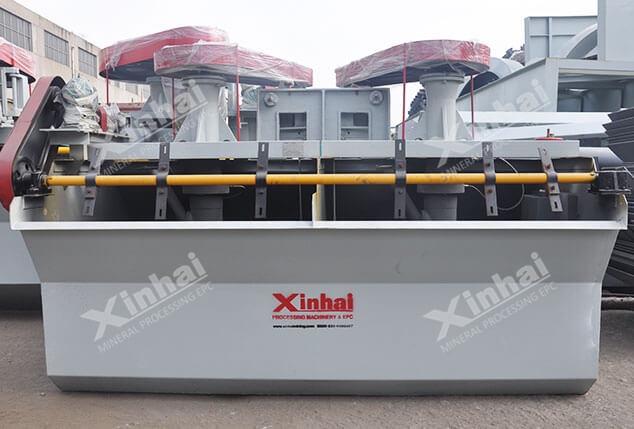
Flotation: For ores with complex disseminated patterns or high purity requirements, flotation becomes the core technology. By adding specific collectors and modifiers, barite can be selectively enriched, effectively separating impurities such as carbonates and fluorite to obtain high-grade concentrate.
Magnetic separation: If the main gangue is a magnetic mineral (such as hematite), magnetic separation is used for separation; this process is simple and efficient.
Chemical beneficiation: For specific impurities that are extremely difficult to separate by physical methods, chemical methods such as leaching are sometimes used as supplementary methods.
This stage is the core of the technology, aiming to maximize the separation of barite from gangue and increase its BaSO₄ content.
The barite concentrate obtained after rigorous separation is usually in the form of a slurry. The final stage aims to remove excess water, producing a solid product that is easy to transport, store, and use.
The process first enters a thickener, where gravity settling initially removes a large amount of water, resulting in a high-concentration underflow. Subsequently, a filter press (such as a chamber filter press) or centrifuge is used for deep dewatering. Mechanical pressure or centrifugal force is used to reduce the moisture content of the concentrate to below 10%, forming a dense filter cake. Sometimes, to further reduce the moisture content, a dryer is introduced for thermal drying. Only then is a final, qualified concentrate with uniform texture and stable properties produced, ready for market application.
The 5th Saudi Arabia Future Minerals International Mining Leaders Summit & Exhibition (FMF2026), held from January 13th to 15th, successfully concluded in Riyadh.
The flotation methods for copper oxide used in industrial applications and key research can be mainly categorized into four types: direct flotation, sulfide-xanthate flotation, amine flotation, and chelating agent-neutral oil flotation. Each method has its own characteristics, applicable scenarios, and economic benefits.
© 2021 Yantai KZ Mining Processing Technology & Equipment Inc.