24-hour service hotline
0086 18733132385
Send us an email
xrguo@xinhaimining.net

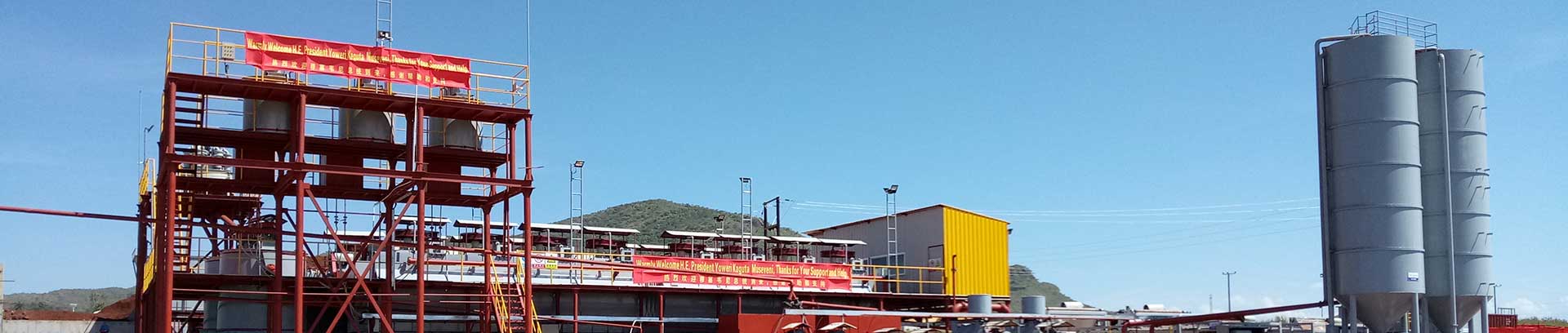
Fluorite is an indispensable core raw material for the fluorochemical, new energy and metallurgical industries. Depending on the associated minerals present in the ore, it can be classified into five major categories: quartz-type, carbonate-type, barite-type, sulphide-type and high-clay composite-type. As the mineralization structures and associated mineral combinations vary significantly across different ores, tailored beneficiation processes must be employed to achieve the efficient separation of high-purity fluorite concentrate.
Currently, flotation is the primary method used in fluorite beneficiation, supplemented by unit operations such as gravity separation, magnetic separation, pre-tailings rejection and staged grinding to form an integrated beneficiation system. The entire process comprises five fundamental stages: crushing and grinding (pre-treatment), pre-concentration and tailings rejection, main flotation, intermediate product recycling, and dewatering.
The crushing and grinding stage is a critical preliminary step in the separation process. As fluorite is brittle, over-grinding can generate large amounts of fine slime that interferes with flotation; consequently, the industry generally adopts a staged grinding process: coarse grinding achieves the single-particle liberation of most minerals, whilst the rough concentrate produced is subjected to secondary fine grinding to liberate fine, encapsulated fluorite, thereby balancing liberation efficiency with slime control. For raw ore with coarse-grained mineralisation, pre-concentration equipment such as heavy-medium separation, spiral chutes and jigging is added to remove low-grade waste rock at an early stage, thereby significantly reducing the load on subsequent grinding and flotation processes and cutting overall processing costs.
The core flotation process is flexibly adjusted according to the type of ore. For single-quartz-type fluorite, a ‘one rough, multiple scavenging, multiple concentrate’ basic flotation structure is adopted, gradually reducing silicon impurities through multiple concentrate stages; for carbonate-associated fluorite, as calcite, dolomite and fluorite all contain calcium and have similar surface properties, separation is more challenging, requiring an extended number of concentrate stages combined with a composite inhibitor system; For fluorite co-occurring with barite, a mixed flotation followed by re-separation process is employed: fluorite and barite are first floated simultaneously, after which reagent conditions are adjusted to suppress barite flotation, thereby achieving the separate enrichment of the two valuable minerals; Sulphide-bearing fluorite requires the addition of a pre-desulphurisation flotation stage to first float sulphide minerals such as pyrite and galena, thereby preventing sulphide impurities from contaminating the fluorite concentrate; For high-slime composite ores, a pre-desliming stage must be added to eliminate the adverse effects on separation caused by clay minerals acting as covering minerals.
The method of middle-product recycling during flotation directly determines the quality of the concentrate and the metal recovery rate; the mainstream approaches are divided into three modes: sequential return, centralised return and middle-product regrinding. Sequential return involves recycling the tailings from each enrichment stage back to the preceding flotation stage, thereby stabilising the process load; centralised return involves feeding all intermediate products into the roughing stage, thereby improving overall recovery rates; for ores with fine-grained, intergrown minerals that are difficult to float, the intermediate product regrinding process is employed, whereby intergrown minerals are re-liberated and re-separated to meet the requirements for the recovery of ultrafine fluorite.
To address the limitations of single-stage flotation, the industry widely employs combined processes such as magnetic flotation, gravity flotation, and flotation-chemical purification. Magnetic separation removes iron impurities; gravity separation recovers coarse-grained fluorite; flotation columns replace multi-stage mechanical concentration, simplifying the process and reducing reagent consumption; for high-grade acid-grade fluorite, chemical leaching is applied after flotation to thoroughly remove carbonate impurities, thereby meeting the standards for high-purity raw materials.
With the advancement of digital technology, intelligent sorting, digital twins and AI-driven process optimisation are gradually being implemented. By monitoring foam and slurry parameters online and automatically adjusting grinding and reagent dosing regimes, production indicators are stabilised, driving the upgrading of fluorite beneficiation towards low-carbon, high-efficiency and intelligent operations.
The industry’s separation of galena centres on the flotation process. The overall workflow comprises five fixed stages: grinding and pre-treatment, slurry conditioning, selective roughing, multi-stage scavenging, and middlings recycling. A tailored reagent system is employed to achieve efficient separation of lead from zinc, sulphur and copper minerals.
The three core processes of open-cast gold mining—drilling, loading and haulage—can all be automated.
© 2021 Yantai KZ Mining Processing Technology & Equipment Inc.