24-hour service hotline
0086 18733132385
Send us an email
xrguo@xinhaimining.net

Lithium is a highly sought after metal due to its high demand for use in batteries, ceramics, and other high-tech applications. One of the main sources of lithium is the mineral spodumene, which can be found in large deposits worldwide. To extract lithium from spodumene, a process known as spodumene flotation is used.
The spodumene flotation process starts with the crushing of the spodumene ore into smaller pieces. This makes it easier to extract the lithium mineral. The crushed ore is then ground into a fine powder and mixed with water to form a slurry. This slurry is then treated with a reagent that creates bubbles which attach to the lithium mineral. The bubbles rise to the surface, carrying the lithium mineral with them, and are then collected.
The spodumene flotation flowsheet consists of several stages, including crushing, grinding, and flotation.
The crushing stage reduces the size of the spodumene ore into smaller pieces, making it easier to extract the lithium mineral.
The grinding stage further reduces the size of the ore into a fine powder, which is then mixed with water to form a slurry.
In the flotation stage, the slurry is treated with reagents to create bubbles that attach to the lithium mineral. The bubbles rise to the surface, carrying the lithium mineral with them, and are then collected. The collected lithium mineral is then further processed to remove impurities and to produce a saleable form of lithium.
The success of the spodumene flotation process depends on the choice of the correct reagents. Reagents are added to the slurry to enhance the separation of the lithium mineral from the other minerals and impurities. Common reagents used in spodumene flotation include fatty acids, such as oleic acid, as well as alcohols and amines. The choice of reagent will depend on the specific requirements of each individual operation and can be optimized to achieve the highest possible recovery of lithium.
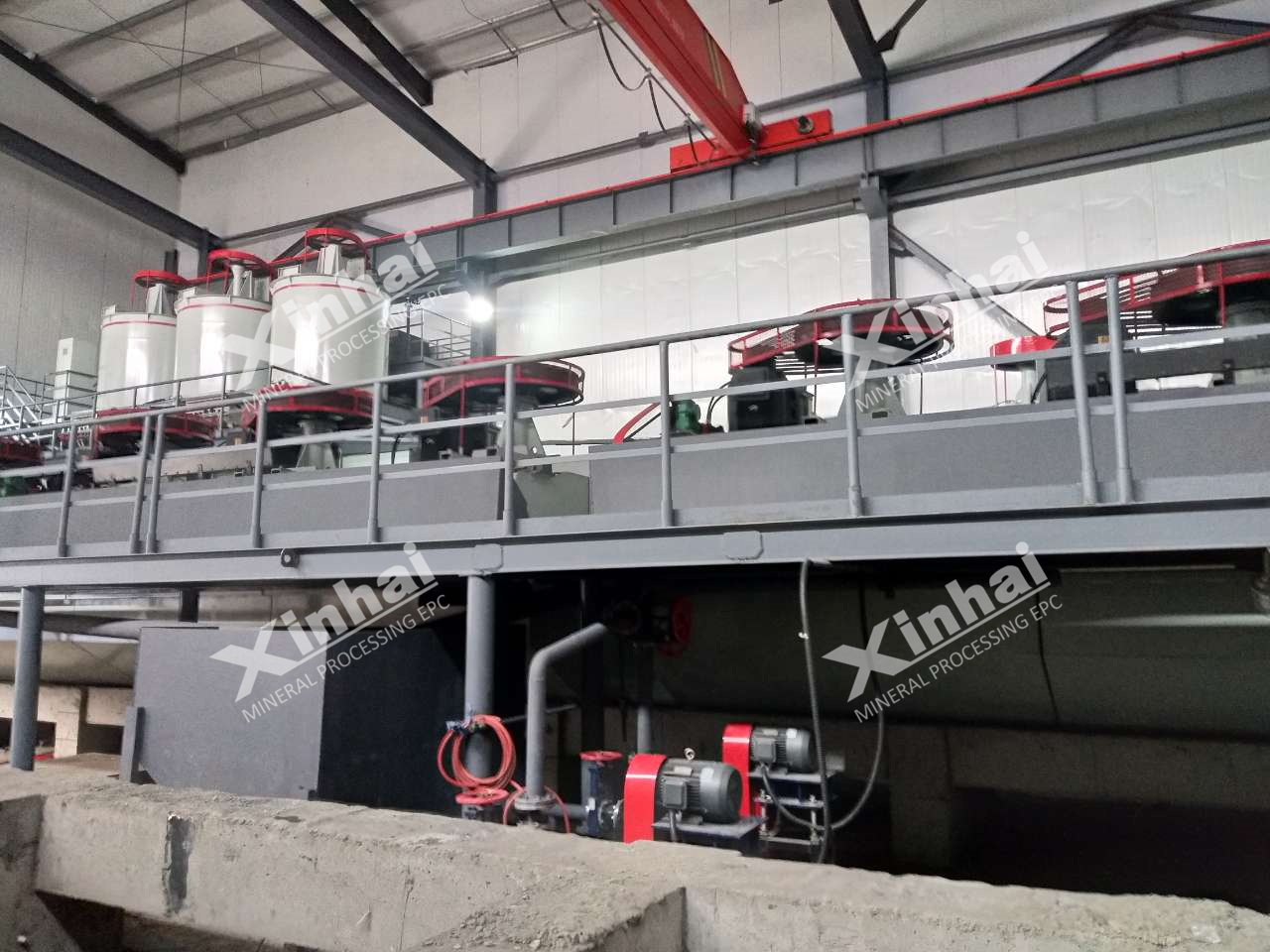
In conclusion, the spodumene flotation flowsheet is a critical part of extracting lithium from spodumene. The process involves a series of steps, including crushing, grinding, flotation, and separation, that are designed to extract the lithium mineral from other minerals and impurities. The selection of the right reagents and equipment is crucial for a successful spodumene flotation process, and the resulting product, lithium carbonate, is an essential material for various industries.
The process starts with crushing the spodumene ore into smaller pieces and grinding it into a fine powder. The powder is then mixed with water to form a slurry, which is then treated with flotation reagents. These reagents create bubbles that attach to the lithium mineral and cause it to rise to the surface of the slurry.
Quartz sand purification is an important process that ensures high-quality, pure quartz sand for various industrial and technological applications. This process refers to the process of refining pure quartz sand from quartz sand. The process is typically divided into the following steps: 1. Pretreatment:......
© 2021 Yantai KZ Mining Processing Technology & Equipment Inc.