24-hour service hotline
0086 18733132385
Send us an email
xrguo@xinhaimining.net

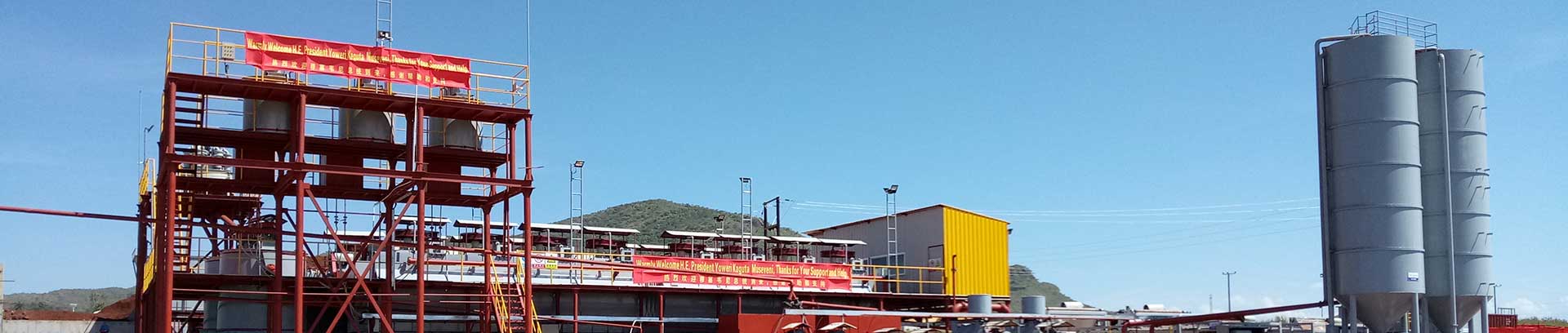
Lead-zinc sulphide ores, as the primary global source of lead and zinc resources, are crucial for securing metal supply through efficient recovery. Possessing excellent natural floatability, these ores achieve recovery rates exceeding 90% via relatively straightforward processing, making them among the most economically viable beneficiation materials. This paper systematically analyses their mineral properties, flotation principles, reagent and equipment selection, demonstrating their technical and economic advantages.
Lead-zinc sulphide ores primarily consist of galena (PbS) and sphalerite (ZnS), whose core characteristics form the basis for efficient separation:
High sulphur hydrophobic surface: Typically containing over 20% sulphur, the mineral surface is naturally hydrophobic and resistant to water wetting, enabling rapid collector adsorption.
Ideal crystal structure: Low Mohs hardness (2-4) and compact crystalline structure facilitate easy liberation into individual particles during grinding, effectively preventing over-grinding and fines interference.
Chemical stability: The flotation process is easily controlled, ensuring stable and reliable operation.
These properties mean sulphide ores require no complex surface modification and can proceed directly to flotation separation.
The flotation principle is based on ‘natural floatability’. In a weakly alkaline pulp (pH 8-10), the thiocarboxyl groups of xanthate collectors (e.g., ethyl xanthate, butyl xanthate) form stable metal chelates with metal ions on the mineral surface. Their non-polar groups orient outward to form a hydrophobic film, causing mineral particles to adhere to bubbles and float to the surface.
Core Reagent System:
Collectors: Low-cost, high-efficiency xanthate-based agents.
Foam Agents: Traditional agents like pine oil, readily available.
Modifiers: Used sparingly, primarily to maintain the weakly alkaline environment.
This reagent system is cost-effective and simple to operate, being key to achieving high economic returns.
The classic three-stage flotation process—‘roughing, scavenging, and concentrating’—is universally adopted for sulphide ore beneficiation. This design is straightforward and achieves high separation efficiency.
Roughing: Rapid flotation to recover the majority of useful minerals.
Scavenging: Enhances tailings recovery and minimises metal loss.
Fine Flotation: Multi-stage enrichment effectively elevates concentrate grade.
Core Equipment Selection:
Benefiting from rapid flotation kinetics, conventional mechanically agitated flotation machines (e.g., XJK, XCF series) suffice. To enhance processing capacity in large plants, high-air-consumption, low-energy-consumption large flotation machines (e.g., JJF, KYF types) are typically employed, significantly boosting output while reducing unit costs.
In summary, sulphide lead-zinc ores, owing to their superior natural floatability and stable physicochemical properties, permit efficient recovery through simple, low-cost reagent regimens and mature, reliable processing flowsheets. This technical and economic advantage ensures their continued dominance in lead-zinc resource development.
The main beneficiation processes for antimony ore include hand sorting, gravity separation, and flotation. The selection of a specific process requires comprehensive consideration of factors such as ore type, mineral composition, structural structure, particle size distribution of useful minerals, the content of valuable components, and metallurgical requirements.
Bench mining is a mining method that divides an open pit into multiple horizontal benches, each with a certain height and width, and performs stripping and mining operations in sequence.
© 2021 Yantai KZ Mining Processing Technology & Equipment Inc.