24-hour service hotline
0086 18733132385
Send us an email
xrguo@xinhaimining.net

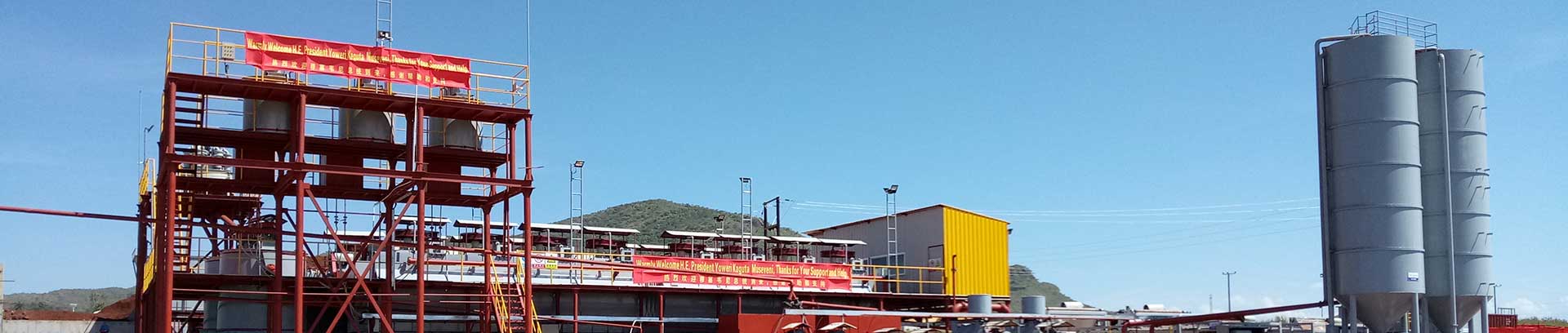
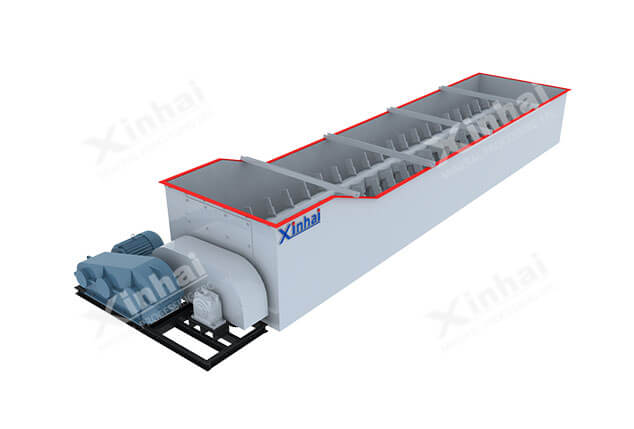
For the efficient recovery of ilmenite from low-grade titanium tailings (with a TiO₂ grade of approximately 4.77%), the flotation process has become a key link in improving the grade of ilmenite concentrate, relying on precise reagent control and graded treatment strategies. Its core logic is to leverage the differences in surface chemical properties between ilmenite and gangue minerals (feldspar, amphibole, etc.). Through desulfurization pretreatment, reagent system optimization, and closed-circuit process design, efficient separation of target minerals from impurities is achieved. It is particularly suitable for the purification of coarse concentrates after high-intensity magnetic pre-separation or centrifuge gravity separation.
The implementation of the process requires first conducting desulfurization pretreatment. Aiming at the sulfur content of approximately 1.05% in the ilmenite coarse concentrate, a "roughing + scavenging" process is adopted. Using sulfuric acid for pulp conditioning, butyl xanthate as a collector, and No. 2 oil as a frother, the sulfur grade can be reduced to below 0.2%, preventing sulfides from affecting subsequent ilmenite flotation.
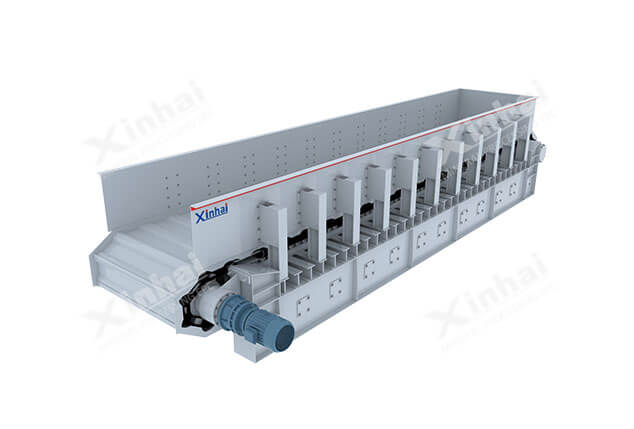
The optimization of the reagent system is the core: sulfuric acid, as an activator, can adjust the pulp pH to acidic, enhancing the surface activity of ilmenite; carboxymethyl cellulose (CMC), as a depressant, can selectively adsorb gangue minerals and reduce their floatability; MOH (a fatty acid-based composite collector) has strong selectivity for ilmenite, with dosages of 2000g/t and 1500g/t adapted for coarse-grained (+0.037mm) and fine-grained (-0.037mm) fractions respectively, balancing grade and recovery rate.
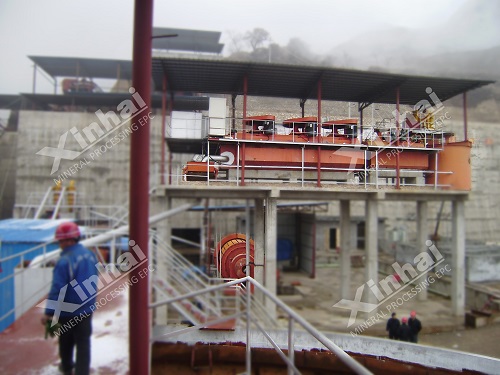
The process design must be graded to match particle size characteristics: the coarse-grained ilmenite concentrate (-0.106mm~+0.037mm) adopts a "roughing + cleaning" closed-circuit flotation, which can obtain concentrate with a TiO₂ grade of 48.09% and a recovery rate of 90.04%; after upgrading the fine-grained fraction (-0.037mm) by centrifuge, a "roughing + two cleanings + one scavenging" closed-circuit process is used, resulting in a TiO₂ grade of 47.49% and a recovery rate of 86.89%. The full-process flotation collaborates with magnetic separation and gravity separation, ultimately increasing the total recovery rate of low-grade titanium tailings to 38.36%, and the harmful element content in the concentrate meets industrial standards.
The key to graphite beneficiation lies in balancing purification efficiency with flake preservation. Tailored processing schemes must be developed based on flake size and crystal type to maximise industrial value retention.
For the efficient recovery of ilmenite from low-grade titanium tailings , the flotation process has become a key link in improving the grade of ilmenite concentrate, relying on precise reagent control and graded treatment strategies.
© 2021 Yantai KZ Mining Processing Technology & Equipment Inc.