24-hour service hotline
0086 18733132385
Send us an email
xrguo@xinhaimining.net

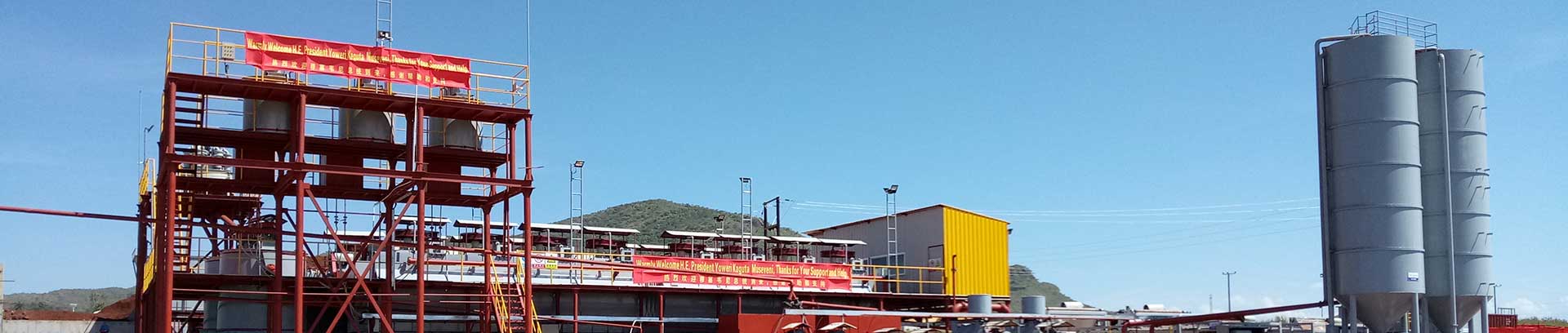
In the barite beneficiation process, crushing and grinding are indispensable critical front-end operations. Their primary functions are to process lumpy raw ore into a particle size suitable for subsequent separation, achieve individual mineral liberation, and create favorable conditions for purification operations such as gravity separation and flotation. Considering the characteristics of barite ore, the commonly used crushing and grinding equipment and their technical features in the industry are as follows:
Primarily used for the primary crushing of raw barite ore, this method is capable of processing large ore blocks. The equipment features a simple structure, convenient maintenance, and low operating costs; however, the resulting material has a wide particle size distribution and poor uniformity.
Suitable for barite ore of medium hardness, this method relies on high-speed rotating hammers to crush the material. It offers advantages such as a high crushing ratio, high throughput, and low energy consumption, with relatively uniform output particle sizes.
Primarily used in the secondary and tertiary crushing stages, this method is particularly suitable for harder barite. The equipment operates stably, offers high wear resistance, and achieves high crushing efficiency, producing material with finer particle size and better particle shape.
Grinding is used to further refine the ore particle size and ensure thorough liberation of the barite minerals. Common equipment includes ball mills and rod mills. Ball mills have a wide range of applications and can process ores of varying hardness; they use steel balls or steel segments as grinding media to achieve fine grinding through impact and abrasion. Rod mills are primarily used for coarse grinding operations; they use steel rods as grinding media, producing coarser particle sizes with minimal over-grinding.
Combining both crushing and grinding functions, this equipment is suitable for fine and ultra-fine grinding operations. It offers significant energy savings, simple operation, and easy automation, effectively enhancing the efficiency of subsequent grinding processes.
Integrating drying, grinding, and classification into a single unit, this mill is primarily used for the fine processing of barite. It features a small footprint, high production efficiency, and stable product particle size, making it ideal for producing high-quality barite powder.
In actual production configurations, factors such as ore hardness, feed particle size, target product fineness, production capacity, and investment and operating costs should be comprehensively considered. Appropriate crushing and grinding equipment and process combinations should be selected to ensure the efficient, economical, and stable operation of the entire production line.
It is primarily sourced from lithium-rich ores such as spodumene, lithium mica and lithium-phosphate-aluminate. The mineralogical characteristics of different lithium-rich ores vary significantly, and the corresponding mineral processing methods each have their own specific focus. The following provides a detailed explanation of the core mineral processing methods for these three types of ore
As an indispensable non-metallic mineral raw material in industry, barite plays a vital role in sectors such as petroleum, chemicals and rubber. Its primary use is as a weighting agent in petroleum drilling to balance the density of the drilling fluid.
© 2021 Yantai KZ Mining Processing Technology & Equipment Inc.