24-hour service hotline
0086 18733132385
Send us an email
xrguo@xinhaimining.net

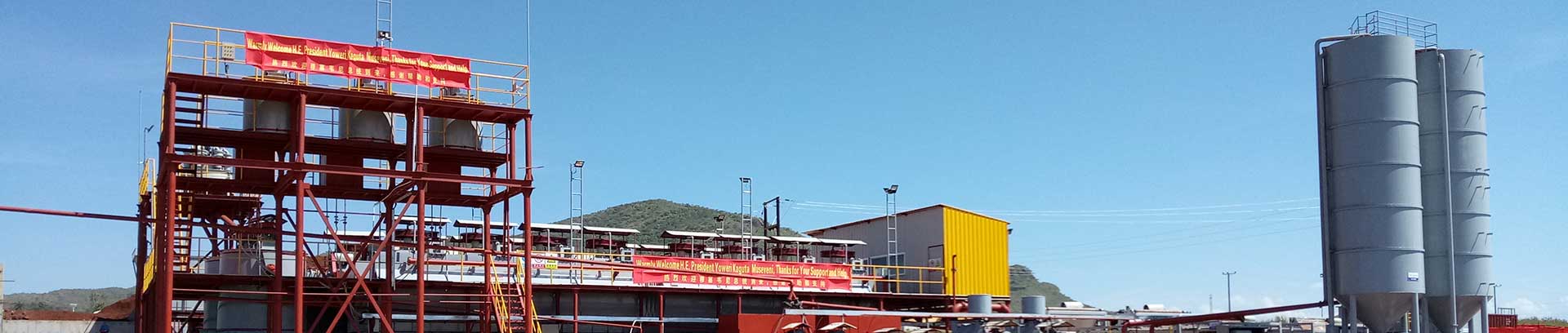
As an indispensable non-metallic mineral raw material in industry, barite plays a vital role in sectors such as petroleum, chemicals and rubber. Its primary use is as a weighting agent in petroleum drilling to balance the density of the drilling fluid.
The barite beneficiation process flow is as follows:
Barite ore is first subjected to crushing and screening to obtain a suitable particle size that meets the requirements of subsequent process stages. Crushing is typically carried out using jaw crushers or impact crushers, whilst fine crushing is usually performed using double-roll crushers or impact crushers. This is followed by grinding and classification. The degree of mineral liberation is determined based on the grain size distribution of the barite mineral within the ore and the economic viability of producing the final product. These steps are designed to release the optimal economically viable quantity of valuable minerals from the ore, thereby preparing it for the beneficiation process.
Barite beneficiation primarily relies on its high density and the significant density difference with gangue minerals, and gravity separation methods are generally employed. Common gravity separation processes include jigging, shaking tables, spiral chutes and heavy-medium hydrocyclones. Different separation methods are adopted for barite with varying grain sizes. When the grain size exceeds 2 mm, heavy-medium separation or jigging may be used; when the grain size is less than 2 mm, shaking tables are suitable for separation. In certain specific circumstances, flotation and magnetic separation methods may also be employed to process particular types of barite ore.
The recovered barite concentrate must undergo a dehydration process comprising three stages—thickening, filtration and drying—to facilitate storage, transport and sale.
In the barite beneficiation process, crushing and grinding are indispensable critical front-end operations. Their primary functions are to process lumpy raw ore into a particle size suitable for subsequent separation, achieve individual mineral liberation, and create favorable conditions for purification operations such as gravity separation and flotation.
Bauxite is a critical mineral resource for national industrial development and the core raw material for producing alumina; more than 90% of the world’s alumina is derived from bauxite.
© 2021 Yantai KZ Mining Processing Technology & Equipment Inc.