24-hour service hotline
0086 18733132385
Send us an email
xrguo@xinhaimining.net

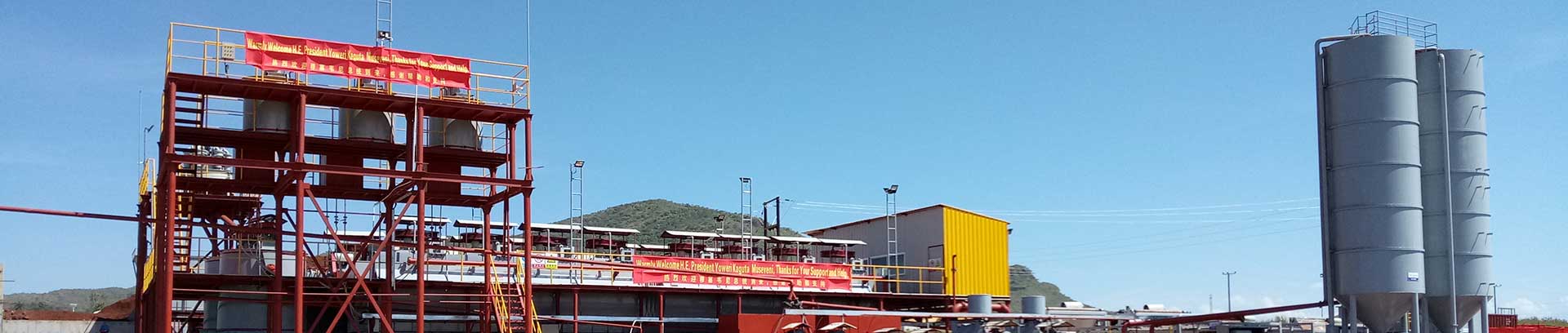
Due to technological and equipment limitations in early lead-zinc beneficiation processes, a significant amount of valuable components—such as lead, zinc, sulfur, iron, barite, feldspar, quartz, and mica—remain in the tailings, making them highly valuable for recovery and utilization. Depending on the mineral types, concentrations, and occurrence conditions, lead-zinc tailings can undergo efficient resource recovery processing.
In terms of valuable component recovery, lead-zinc ore recovery is the core focus. Sulfide lead-zinc tailings primarily contain galena, sphalerite, and pyrite, with quartz and calcite as the main gangue minerals; these are typically recovered using a crushing–flotation process. Due to the complex mineral composition and significant fluctuations in component concentrations in the tailings, priority flotation is often employed, with desliming performed prior to flotation to optimize performance indicators and reduce reagent consumption. For mixed oxide and sulfide tailings, a combined flotation–partial separation process can be adopted to produce lead concentrate and zinc concentrate separately.
The synergistic recovery of sulfur, iron, and zinc is equally critical. If the tailings contain difficult-to-separate pyrrhotite, which can easily lead to excessive sulfur levels in the iron concentrate, a combined “weak magnetic separation + flotation” process can be employed to simultaneously recover sulfur, iron, and zinc, thereby reducing the content of harmful impurities in the iron concentrate.
Barite recovery typically employs a “flotation desulfurization + regrinding + spiral separation + flotation” process, which efficiently recovers low-grade barite from the tailings. For feldspar and quartz recovery, a combined “magnetic separation + flotation” process is used to remove impurities such as mica, siderite, and fluorite, thereby improving the quality of feldspar and quartz products.
In addition to the recovery of valuable metals, lead-zinc tailings can be comprehensively utilized in three major areas: First, dry tailings disposal, which employs a “hydrocyclone + dewatering screen + filter press” process to achieve dewatering and dry stacking of tailings, thereby reducing storage capacity pressure and allowing the clear water to be recycled; Second, backfilling of mined-out areas: This involves using cement-bound tailings backfilling technology, where cement and other binding materials are added to solidify and fill the mined-out areas, thereby improving mining conditions and yielding significant environmental and economic benefits; Third, production of construction materials: Since the composition of tailings is similar to that of cement raw materials, they can replace raw materials such as clay and iron powder. Additionally, trace elements in the tailings can act as mineralization and fluxing agents, enhancing calcination efficiency.
In summary, by recovering valuable components from lead-zinc tailings through combined processes such as gravity separation, flotation, and magnetic separation, and integrating these with comprehensive utilization methods including dry stacking, backfilling, and conversion into building materials, it is possible to achieve maximum resource utilization and promote green, low-carbon development.
Heap leaching is currently a highly cost-effective gold extraction technology in gold ore beneficiation, with significant advantages in low-grade and ultra-low-grade gold ore projects. This process is suitable for low-grade gold ores, by-product ores, and surface ores, and has a wide range of applications.
Iron ore beneficiation is an essential purification step before smelting. Its main purpose is to increase the iron content, separate unwanted gangue minerals, and ensure that the raw material meets metallurgical requirements. It mainly includes crushing, grinding, magnetic separation, and dewatering, combined with screening and flotation processes to achieve efficient purification.
© 2021 Yantai KZ Mining Processing Technology & Equipment Inc.