24-hour service hotline
0086 18733132385
Send us an email
xrguo@xinhaimining.net

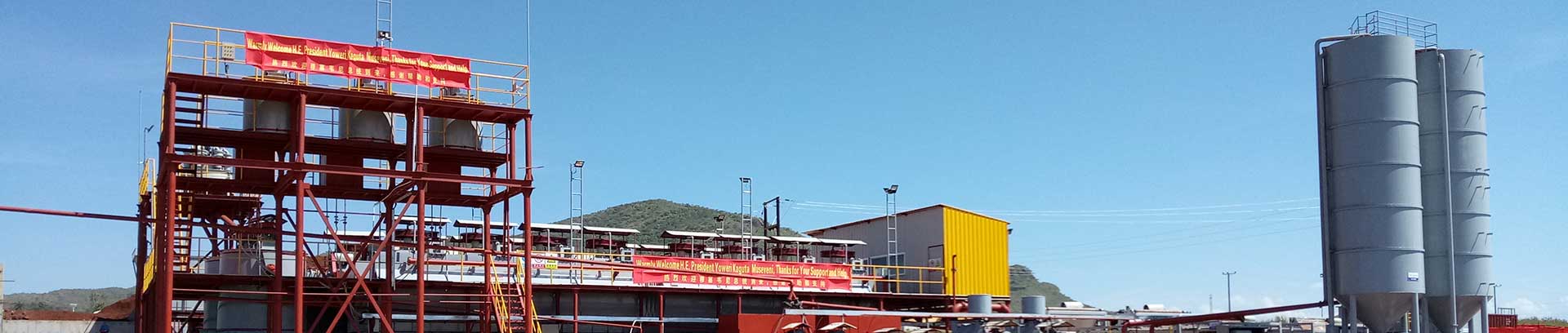
Heap leaching is currently a highly cost-effective gold extraction technology in gold ore beneficiation, offering significant advantages in low-grade and ultra-low-grade gold mining projects. This process is characterized by its simplicity, low energy consumption, minimal equipment requirements, and low capital and operating costs. It is suitable for low-grade gold ores such as oxidized ores, by-product ores, and surface ores, and is widely applied.
Gold heap leaching is primarily divided into six core stages:
Ore Preparation: This includes crushing, granulation, and pre-treatment. Crushing reduces the ore to an appropriate particle size, enhancing permeability and leaching efficiency; fine ore and highly clayey ore require granulation, involving the addition of cement, lime, and sodium cyanide solution to improve the heap’s air permeability and gold leaching performance; pre-treatment further enhances the ore’s leachability.
Leach Pad Construction: An impermeable liner is laid using materials such as clay, concrete, or plastic sheeting, and drainage ditches are installed to prevent solution leakage and ensure effective collection of the leachate.
Heap Construction: The ore is stacked uniformly, typically to a height of 3–9 m. It is loosely piled using appropriate methods to avoid compaction, ensuring the permeability of the heap and the stability of its slopes.
Leachate Preparation: Sodium cyanide-based alkaline solutions are commonly used for gold ore. The formulation is determined based on the ore composition to create optimal conditions for gold leaching.
Leachate Distribution and Collection: The leachate is uniformly distributed via a spray system, with intensity and duration carefully controlled. The leachate flows through collection channels into a collection tank and is then sent for subsequent treatment.
Leachate Treatment: The primary method involves activated carbon adsorption. Gold-bearing carbon is desorbed and electrolyzed to produce gold slurry, from which solid gold is ultimately refined. This process may also be combined with the zinc displacement method.
In actual production, beneficiation tests must be conducted based on the properties of the ore to determine the appropriate heap leaching process and parameters. A combined “high-grade cyanidation + low-grade heap leaching” approach may also be adopted to enhance overall recovery efficiency.
Magmatic apatite has coarse crystal grains, is easily dissociated, and has good recoverability. It is often associated with magnetic minerals, so flotation is the primary method. A combined magnetic-flotation process can be employed to achieve the comprehensive recovery of phosphorus and magnetic minerals.
In terms of valuable component recovery, lead-zinc ore recovery is the core focus. Sulfide lead-zinc tailings primarily contain galena, sphalerite, and pyrite, with quartz and calcite as the main gangue minerals; these are typically recovered using a crushing–flotation process.
© 2021 Yantai KZ Mining Processing Technology & Equipment Inc.