24-hour service hotline
0086 18733132385
Send us an email
xrguo@xinhaimining.net

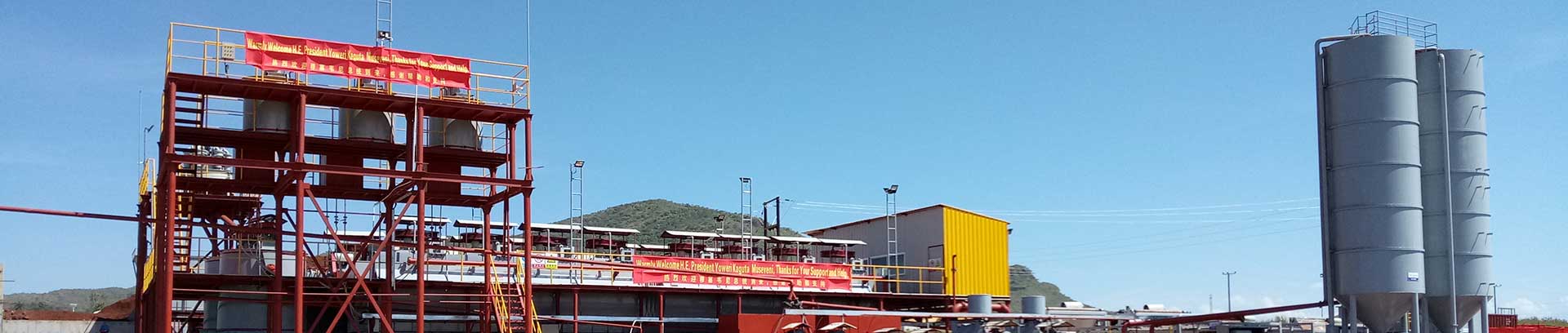
Copper sulfide minerals, represented by chalcopyrite, chalcocite, and bornite, are naturally highly floatable, making flotation the core recovery process. This process achieves efficient separation of copper sulfide from gangue minerals by controlling the pulp environment and selecting targeted reagents. The core process includes three stages: pretreatment, flotation, and product purification.
The pretreatment stage primarily involves grinding to fully liberate the copper sulfide minerals, preventing reduced recovery efficiency due to fine particle size. After grinding, pulp adjustment is necessary by adding pH adjusters to control the pulp's acidity and alkalinity to a suitable range, creating a stable environment for subsequent flotation. Simultaneously, dispersants can be added to break up slime agglomerates and reduce interference from fine slime.
The flotation operation employs either "preferential flotation" or "mixed flotation" processes. Preferred flotation is suitable for polymetallic copper sulfide ores. By sequentially adding different depressants and collectors, copper is separated from other sulfide minerals in stages. Mixed flotation, on the other hand, first floats all sulfide minerals together, then purifies copper from other minerals through separate flotation. Collectors are xanthate-based, ester-based, or sulfur-nitrogen-based reagents, which enhance the hydrophobicity of the copper sulfide surface through chemisorption. Frothing agents are used to generate stable foam, carrying copper mineral particles to the surface.
The product purification stage optimizes parameters through multi-stage cleaning and scavenging. During cleaning, the amount of depressant is gradually increased to suppress gangue minerals and small amounts of associated sulfide minerals, improving the copper concentrate grade. Scavenging adds appropriate amounts of collectors to the tailings to maximize resource recovery for any uncollected copper minerals. The entire process forms a closed loop, ensuring that the final copper concentrate quality meets industrial requirements.
The core process of monazite beneficiation is gravity separation, supplemented by combined processes such as magnetic separation, electrostatic separation, and flotation.
The gravity separation process for white tungsten ore is a physical mineral processing method that achieves separation based on the density differences between white tungsten ore and gangue minerals. It offers significant advantages such as a simple process flow, low cost, and environmental friendliness. The density of scheelite is significantly higher than that of gangue minerals such as quartz and calcite, providing a solid foundation for gravity separation.
© 2021 Yantai KZ Mining Processing Technology & Equipment Inc.