24-hour service hotline
0086 18733132385
Send us an email
xrguo@xinhaimining.net

Monazite mainly originates from coastal and alluvial placer deposits.
Monazite does not exist alone but is associated with a series of heavy minerals (heavy sands), primarily including:
Titanium minerals: Ilmenite, Rutile
Zircon: Zircon sand
Others: Garnet, Tourmaline, Mica, etc.
Particle size characteristics: Minerals in placer deposits have typically undergone natural weathering and transportation, resulting in good mineral liberation and relatively uniform particle size.
The core process of monazite beneficiation is gravity separation, supplemented by combined processes such as magnetic separation, electrostatic separation, and flotation.
Stage 1: Pretreatment and Preliminary Enrichment
Mining: Typically employs either wet or dry mining methods.
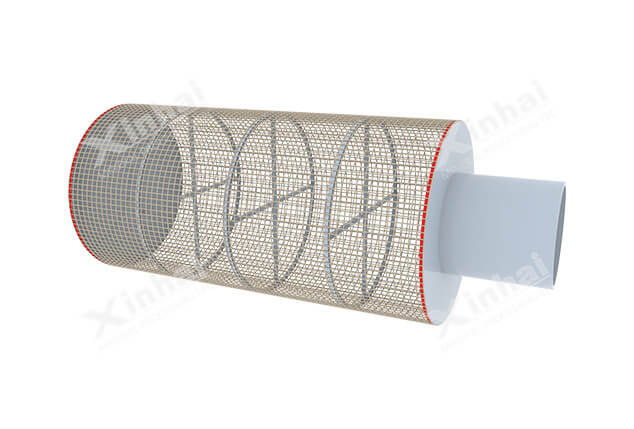
Screwing and Washing: Removes large gravel, plant roots, and other impurities, and breaks up mineral agglomerates using a washing machine, ensuring sufficient mineral particle liberation.
Spiral Conveyor: This is the most crucial gravity pre-enrichment step. Stage Two: Separation of Heavy Minerals Utilizing the difference in specific gravity between minerals, heavy minerals are separated from large quantities of lighter gangue such as quartz. The resulting product is called "heavy mineral concentrate" or "rough concentrate."
Stage Two: Separation of Heavy Mineral Concentrate
The several heavy minerals contained in the rough concentrate can be separated one by one through a series of physical methods. This is the core and key technology of the concentrator.
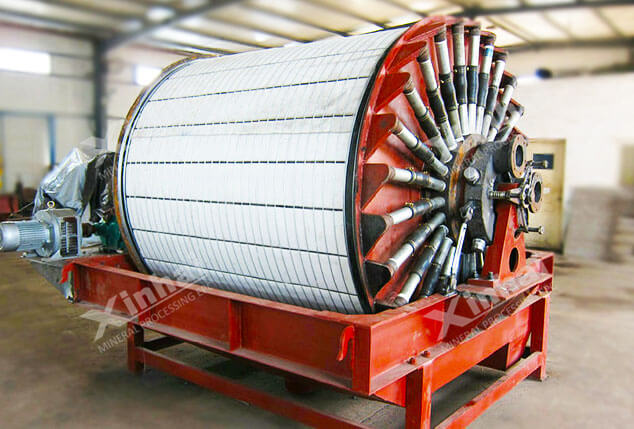
Drying: The rough concentrate is dried to prepare for subsequent dry magnetic separation and electrostatic separation.
Magnetic Separation:
Low-intensity magnetic separation: Magnetite is first separated using a low-intensity magnetic separator.
Medium-intensity magnetic separation: Ilmenite, a mineral with neutral magnetic strength, is separated.
High-intensity magnetic separation: Monazite and garnet are separated. Monazite has weak magnetic properties (paramagnetism), separating non-magnetic zircon and rutile.
Gravity separation: The monazite and garnet mixture obtained in the third stage is separated from monazite and garnet through gravity separation (wind-powered or hydraulic shaking table) to obtain high-grade monazite.
Electrostatic separation: The non-magnetic products obtained from the third stage (mainly zircon and rutile) are fed into a high-voltage electrostatic separator.
Utilizing the difference in conductivity of minerals in a high-voltage electric field, the more conductive rutile is separated from the non-conductive zircon.
Flotation: To further improve the grade and recovery rate of monazite, flotation is used as a supplement.
The brittle and easily mud-forming nature of wolframite makes beneficiation and fine sludge treatment indispensable parts of the beneficiation process. These two stages revolve around upgrading and removing impurities, and reducing losses by removing fine sludge
Copper sulfide minerals, represented by chalcopyrite, chalcocite, and bornite, are naturally highly floatable, making flotation the core recovery process. This process achieves efficient separation of copper sulfide from gangue minerals by controlling the pulp environment and selecting targeted reagents. The core process includes three stages: pretreatment, flotation, and product purification.
© 2021 Yantai KZ Mining Processing Technology & Equipment Inc.