24-hour service hotline
0086 18733132385
Send us an email
xrguo@xinhaimining.net

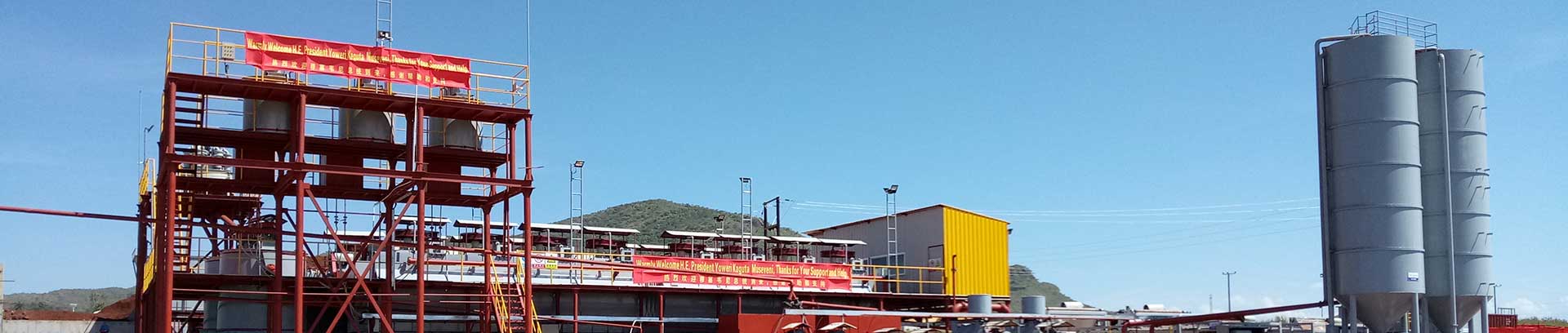
The brittle and easily mud-forming nature of wolframite makes beneficiation and fine sludge treatment indispensable parts of the beneficiation process. These two stages revolve around "upgrading and removing impurities, and reducing losses by removing fine sludge," and are crucial for transforming rough concentrate into qualified final concentrate and maximizing the recovery of tungsten resources. They directly determine the final beneficiation indicators and resource utilization rate.
The core of the beneficiation stage is the separation, impurity removal, and comprehensive recovery of the rough concentrate obtained from gravity separation, ultimately producing qualified tungsten concentrate. The rough concentrate after gravity separation contains a large number of impurities such as sulfide minerals, and has a variety of low-grade, closely related, and complex mineral composition, significantly increasing the difficulty of separation.
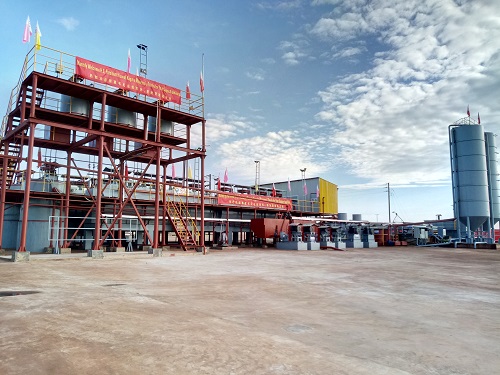
The beneficiation stage often employs a combined process flow of gravity separation, magnetic separation, flotation, and elm flotation. For different impurity compositions, some beneficiation plants also use chemical treatment methods: oxidative roasting to remove sulfur and arsenic, chlorination roasting to remove tin, acid leaching to remove phosphorus and calcium, and in some cases, even hydrometallurgical methods. The combination of physical and chemical processes effectively removes impurities and improves the grade of tungsten concentrate, while also comprehensively recovering associated valuable minerals from the rough concentrate, achieving efficient resource utilization.
The fine slime treatment stage is a specialized step to address the slime formation problem in wolframite. Wolframite slime is divided into primary slime and secondary slime. The latter consists of over-crushed fine particles generated during mining, transportation, crushing, and grinding. This type of slime has a higher grade than the original ore and is rich in valuable elements; discarding it with tailings would result in significant metal loss. Wolframite slime also exhibits characteristics such as a large difference between yield and tungsten metal content, fine and wide particle size, and complex mineral composition, thus requiring centralized and separate processing.
Currently, most beneficiation plants employ a standardized process: first, the tungsten slime is concentrated using a thickener; then, it is classified using a hydraulic classifier; subsequently, a shaking table is used for coarse and scavenging separation; the tailings from the shaking table are used to recover residual valuable minerals via a blanket sluice; finally, all the obtained concentrate is further refined using a shaking table to obtain fine slime concentrate, thus preventing the loss of tungsten ore from the slime at the source.
Antimony ore beneficiation primarily utilizes gravity concentration and flotation as two main processes. These two methods are suitable for different ore types and particle size characteristics and can also be used in combination, providing flexible and efficient solutions for the separation of various antimony ores and helping mines achieve both economic and resource benefits.
The core process of monazite beneficiation is gravity separation, supplemented by combined processes such as magnetic separation, electrostatic separation, and flotation.
© 2021 Yantai KZ Mining Processing Technology & Equipment Inc.