24-hour service hotline
0086 18733132385
Send us an email
xrguo@xinhaimining.net

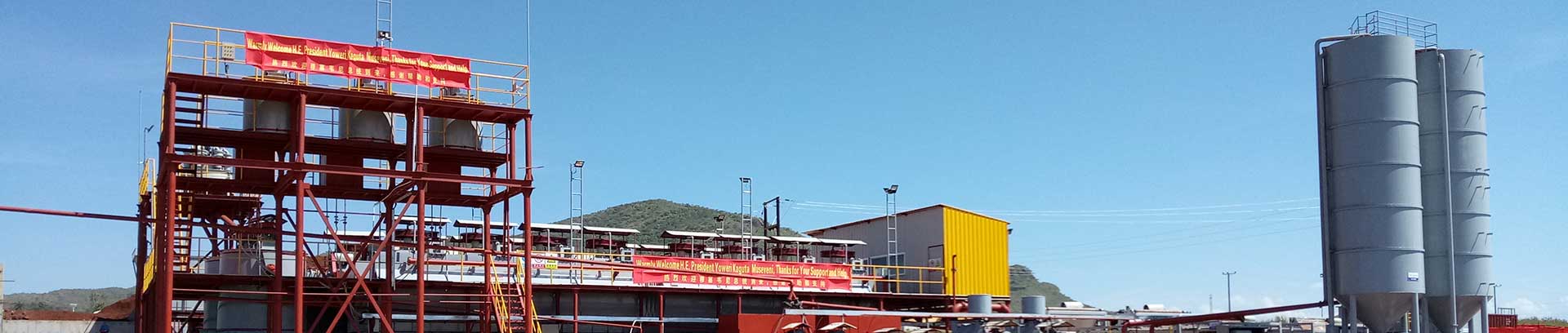
Iron ore beneficiation is an essential purification step prior to smelting. Its primary objective is to increase the iron content, separate unwanted gangue minerals, and ensure that the feedstock meets metallurgical requirements. The entire process consists of multiple interconnected stages, primarily including crushing, grinding, magnetic separation, and dewatering, combined with screening and flotation to achieve efficient purification.
Based on iron content, iron ore can be classified into high-grade (≥65%), medium-grade (62%–65%), and low-grade (<62%) categories. Low-grade ore is generally not used directly in metallurgical processes. The most commonly used iron ores in industry are hematite (Fe₂O₃, containing approximately 70% iron) and magnetite (Fe₃O₄, containing approximately 72% iron). Other low-grade varieties include limonite and siderite.
The mineral processing flow begins with pre-treatment. After preliminary screening, the raw ore undergoes primary crushing using a jaw crusher to reduce large ore blocks to less than 1 meter in size. It is then further crushed using a cone crusher for medium and fine crushing or a fine jaw crusher, and screened to less than 12 millimeters to provide an appropriate particle size for subsequent separation.
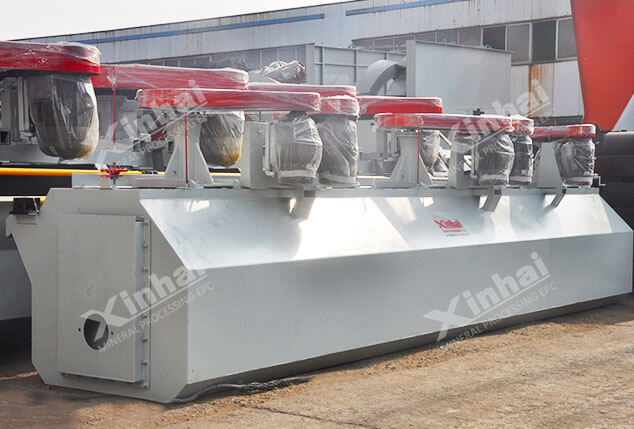
The beneficiation process primarily relies on magnetic separation, supplemented by flotation. First, a low-intensity magnetic field is used for preliminary separation to separate high-grade iron minerals from low-grade particles; substandard low-grade ore is returned to the roughing stage for reprocessing. The material from crushing and roughing is fed into a ball mill, ground to a powdery consistency, then dewatered in a dewatering tank, and subsequently subjected to high-intensity magnetic separation using a disc-type magnetic separator to further enhance the iron grade. Low-grade material with remaining value after beneficiation is returned to the process for reprocessing, while the final tailings are discharged as waste.
In terms of beneficiation suitability, magnetite, due to its weak magnetic properties, is more suitable for magnetic separation; hematite yields better results with gravity separation and flotation, and is commonly processed using equipment such as jigs, centrifugal separators, and shaking tables, making it the more preferred raw material for industrial beneficiation.
Through systematic beneficiation, low-grade iron ore can be effectively upgraded to produce high-grade iron concentrate that meets metallurgical standards, providing a stable and high-quality feedstock for subsequent smelting.
In terms of valuable component recovery, lead-zinc ore recovery is the core focus. Sulfide lead-zinc tailings primarily contain galena, sphalerite, and pyrite, with quartz and calcite as the main gangue minerals; these are typically recovered using a crushing–flotation process.
The main beneficiation methods for white tungsten ore include gravity separation, magnetic separation, chemical beneficiation and flotation, of which flotation is the most widely used and can be further divided into ambient temperature flotation and heated concentration.
© 2021 Yantai KZ Mining Processing Technology & Equipment Inc.