24-hour service hotline
0086 18733132385
Send us an email
xrguo@xinhaimining.net

As an important non-metallic mineral, the whiteness and purity of barite directly determine its application value. Natural ore often contains colour-causing impurities such as iron and titanium, as well as gangue minerals such as silicates and carbonates; it must therefore undergo efficient purification and whitening treatment to meet the stringent requirements of sectors such as oil drilling, coatings, rubber and high-end fillers. Current mainstream purification and whitening processes are based on physical pre-treatment and centred on deep chemical purification, achieving efficient impurity removal and a significant improvement in quality.
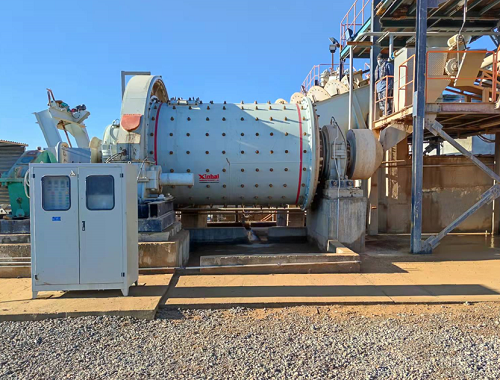
Physical purification is a critical stage of pre-treatment, primarily involving crushing and grinding to ensure thorough mineral liberation, thereby laying the foundation for subsequent impurity removal. Combined with processes such as gravity separation, magnetic separation and flotation, it can effectively separate gangue minerals such as quartz and calcite. Magnetic separation specifically removes magnetic impurities, whilst flotation precisely separates difficult-to-process minerals such as feldspar and mica. These physical processes can preliminarily enhance ore grade and reduce the burden on subsequent chemical treatment.
Chemical purification is the core method for achieving deep whitening, primarily comprising three major processes: acid leaching, reduction-complexation, and acid leaching-reduction. The acid leaching method utilises acidic solutions to dissolve acid-soluble impurities and colour-causing oxides within the ore, significantly enhancing whiteness and purity; it is simple to operate and delivers outstanding whitening results. The reduction-complexation method employs reducing agents to reduce high-valent colour-causing metal ions, whilst using complexing agents to stabilise the reduction products, effectively preventing yellowing during product storage and offering excellent stability.
The acid leaching-reduction process combines the advantages of the first two methods, employing organic acids that possess both acidic and chelating properties. These work in synergy with reducing agents to achieve a triple effect: acid leaching for impurity removal, reduction for decolourisation, and chelation for colour stabilisation. This process is less corrosive and more environmentally friendly, with a simplified operational workflow. It ensures highly efficient whitening whilst reducing chemical consumption and equipment wear, offering significant overall advantages.
Following physical pre-treatment and chemical deep purification, the whiteness and purity of barite are significantly enhanced, with colour-causing impurities effectively removed, ensuring consistent quality that meets standards. Different processes can be flexibly combined according to the characteristics of the ore and product requirements, balancing purification efficiency, production costs and environmental standards, thereby providing reliable technical support for the large-scale production of high-quality barite products.
Commonly used industrial leaching agents for quartz sand include hydrochloric acid, sulfuric acid, oxalic acid, and hydrofluoric acid. A typical process flow is: crushing → washing → magnetic separation → acid leaching → washing → dehydration → drying. After the raw ore is crushed, it is first washed to remove some easily soluble impurities, and then magnetic separation is performed to remove most of the mechanical iron, thus creating favorable conditions for subsequent acid leaching.
Industrially, the purification of spodumene primarily employs four mainstream processes: flotation, heavy-medium separation, magnetic separation, and combined beneficiation.
© 2021 Yantai KZ Mining Processing Technology & Equipment Inc.