24-hour service hotline
0086 18733132385
Send us an email
xrguo@xinhaimining.net

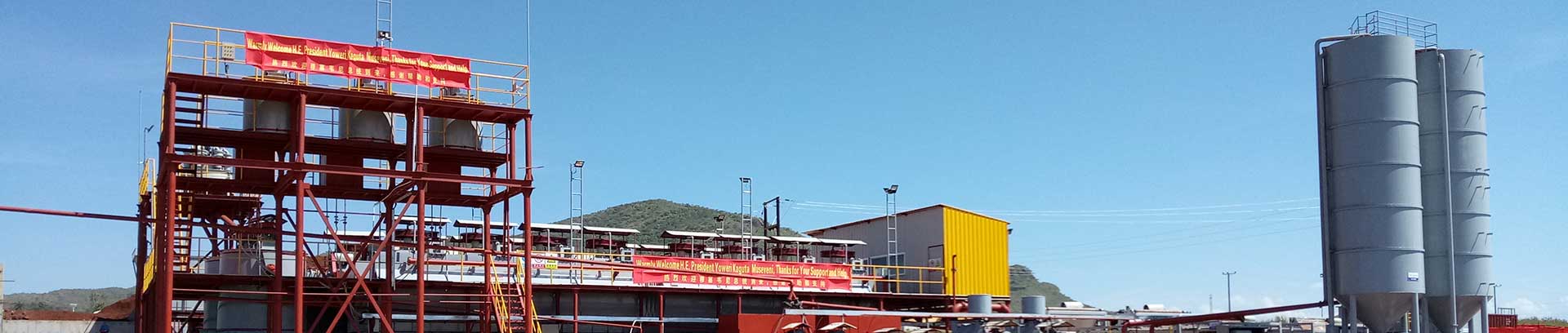
Quartz acid leaching is a key technology in the production of high-purity quartz. Its core principle lies in utilising the property that quartz is insoluble in acids (with the exception of hydrofluoric acid). By inducing a chemical reaction between the acid solution and associated impurities, impurities such as iron, aluminium, calcium and magnesium are dissolved and removed, thereby achieving the efficient purification of quartz.
In industry, hydrochloric acid, sulphuric acid, oxalic acid and hydrofluoric acid are commonly used as leaching agents. The typical process flow is: crushing → washing → magnetic separation → acid leaching → washing → dehydration → drying. After the raw ore is crushed, it is first washed to remove some of the easily soluble impurities, followed by magnetic separation to remove the vast majority of mechanical iron, thereby creating favourable conditions for subsequent acid leaching.
During the acid leaching stage, different reagent combinations are employed depending on the purification requirements: the ore may first be treated with a heated hydrochloric acid solution, followed by leaching at ambient temperature using a mixture of hydrochloric and sulphuric acids; alternatively, a mixture containing oxalic acid and copper salts may be used for rapid leaching, with the reagents being recycled; For high-purity purification, a hydrofluoric acid system is employed, which can be used alone or in combination with sodium metabisulphite; alternatively, a mixture of hydrochloric acid and fluorosilicic acid can be used for treatment or staged leaching, combined with high-temperature enhanced reaction to improve impurity removal.
The effectiveness of quartz acid leaching is primarily influenced by three factors: acidity, temperature and time. Acidity directly determines the reaction capacity; appropriately increasing the acid concentration can increase the number of active molecules, accelerate the reaction rate and improve the purification effect. Temperature is a key influencing factor; at room temperature, only some impurities react with the acid, whilst heating can significantly enhance the leaching effect; seasonal temperature variations can also lead to differences in purification results. Time is closely related to temperature and particle size; leaching times must be extended in low-temperature environments. Fine-grained quartz has a large surface area and reacts rapidly, whereas coarse particles require longer periods to ensure impurities react fully.
In actual production, by appropriately controlling acidity, temperature and time, and combining these with preliminary pre-treatment processes, various impurities in quartz can be effectively removed, yielding high-purity quartz products that meet the requirements of high-end manufacturing sectors.
The main beneficiation methods for white tungsten ore include gravity separation, magnetic separation, chemical beneficiation and flotation, of which flotation is the most widely used and can be further divided into ambient temperature flotation and heated concentration.
The whiteness and purity of barite directly determine its application value. Natural barite typically contains coloring impurities such as iron and titanium, as well as gangue minerals such as silicates and carbonates; therefore, it must undergo efficient purification and whitening treatments to meet the requirements.
© 2021 Yantai KZ Mining Processing Technology & Equipment Inc.