24-hour service hotline
0086 18733132385
Send us an email
xrguo@xinhaimining.net

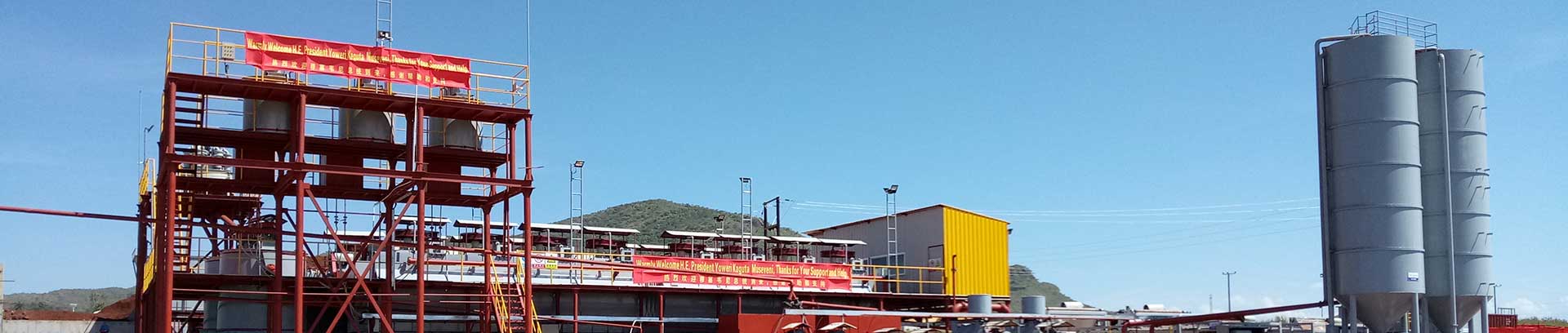
The carbon-in-pulp (CIP) gold extraction process involves introducing activated carbon into a cyanide-leached slurry to adsorb the gold dissolved therein onto the activated carbon, and subsequently recovering the gold from the activated carbon. The carbon-in-pulp process retains the leaching stage—the core process of conventional cyanidation (CCD)—whilst eliminating the subsequent stages of liquid-solid separation and zinc precipitation. These are replaced by carbon adsorption, desorption and electrolysis. Consequently, it fundamentally resolves the issues inherent in traditional cyanidation methods, establishing itself as the most viable new process in today’s whole-ore cyanidation gold extraction.
The carbon-in-pulp gold extraction process places relatively high demands on mineral processing equipment; the equipment in each process stage has its own specific performance characteristics and functions, and the process comprises key operations such as feed preparation and activated carbon regeneration.
(1) Feed preparation involves grinding the ore to a particle size suitable for cyanidation, typically -0.577 mm, and removing impurities such as wood chips. Concentration and dewatering are then carried out to achieve a leaching pulp concentration of 45%–50%.
(2) Agitation and leaching are similar to the conventional cyanidation process, generally involving 5–8 agitation tanks.
(3) Carbon adsorption: The cyanide slurry is transferred from the leaching tank to the adsorption tank. The adsorption tank is fitted with a grate screen and a slurry lift, which facilitate counter-current flow between the activated carbon and the slurry to adsorb the gold dissolved in the slurry. The grate screen helps to reduce wear on the activated carbon. As the mesh openings of the front grate screen are prone to clogging by activated carbon, they must be cleaned using compressed air.
(4) Desorption of gold-loaded carbon: Currently, four desorption methods are available: ① desorption using a hot caustic sodium cyanide solution; ② desorption using a low-concentration caustic sodium cyanide solution with added alcohol; ③ desorption using a caustic sodium cyanide solution under heated and pressurised conditions; ④ desorption using a high-concentration caustic sodium cyanide solution.
(5) Electrolytic extraction or conventional zinc powder displacement: The gold-loaded carbon is treated to yield a high-grade precious liquid containing up to 600 g/m³ of gold. Gold powder is obtained via electrolytic extraction or zinc displacement, and is subsequently sent for smelting to produce gold ingots.
(6) Regeneration and reuse of activated carbon: After desorption, the activated carbon is first acid-washed with dilute sulphuric acid (or nitric acid) to remove accumulated substances such as carbonates. After several cycles of reuse, thermal activation is required to restore the carbon’s adsorption capacity.
The carbon-in-pulp (CIP) process is primarily suitable for gold-bearing oxidised ores with high clay content. Due to the high clay content in the ore, solid-liquid separation is difficult, and existing filter presses are unable to effectively separate the precious liquid from the tailings; consequently, conventional cyanidation methods cannot achieve satisfactory technical and economic indicators. Practice has shown that the CIP process has achieved good results on an industrial scale, and the gold ore beneficiation equipment customised for the CIP process is also highly favoured in the current market.
In lithium-rich clay deposits, lithium mainly exists as a single mineral, kirque, with some adsorbed onto montmorillonite; it is rarely associated with illite or kaolinite. Currently, the industry has established several mature lithium extraction processes, mainly including four categories: sulfuric acid leaching, roasting leaching, enhanced leaching, and combined acid-base leaching.
Flash flotation specifically refers to the addition of a flotation unit to the classification and sand-settling circuit, with a flotation duration of just 2–4 minutes. This allows for early separation before minerals are overground, directly producing qualified concentrate or rough concentrate.
© 2021 Yantai KZ Mining Processing Technology & Equipment Inc.