24-hour service hotline
0086 18733132385
Send us an email
xrguo@xinhaimining.net

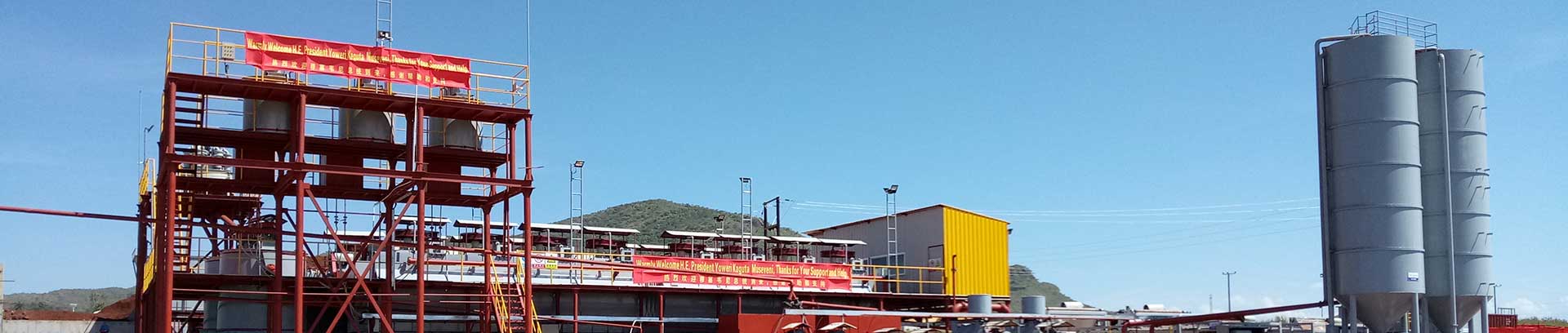
In traditional grinding and classification processes, the sand discharged from hydrocyclones carries a large amount of valuable minerals—such as gold and sulphides—that have already been liberated as individual particles back to the grinding mill for repeated grinding, which is highly likely to cause over-grinding of the minerals: Coarse-grained valuable minerals are ground into fine, muddied particles, significantly reducing their floatability. Ultimately, these are lost with the tailings, not only increasing the mill’s circulation load and reducing equipment throughput but also resulting in a waste of precious mineral resources. Flash flotation technology has emerged in response to this challenge; leveraging its advantage of rapid separation within a short timeframe, it has become a key process for improving quality and efficiency in the grinding circuit.
Flash flotation specifically refers to the addition of a flotation unit to the classification and sand-settling circuit, with a flotation duration of just 2–4 minutes. This allows for early separation before minerals are overground, directly producing qualified concentrate or rough concentrate. There are clear criteria for determining the suitability of this process: significant benefits can be achieved by implementing flash flotation when the grade of the hydrocyclone underflow exceeds that of the overflow, the single-particle liberation rate for a specific particle size exceeds 70%, or there is severe loss of fine-grain metals in the tailings, particularly where the ore exhibits excellent natural floatability (such as native gold or crystalline graphite). Field tests at several domestic gold mines have shown that gold grades in the key particle size range of the underflow can reach over 100 g/t. The addition of flash flotation has increased the overall gold recovery rate by 2–5 percentage points, whilst at a large copper mine in Indonesia, daily processing capacity was increased from 15,000 t to 17,000 t following its implementation.
Mineral particle size, slurry concentration, foam thickness and agitation speed are the four core parameters for controlling separation performance. This process is suitable for high-concentration feed of 45%–70%; by appropriately reducing foam thickness and matching bubble size, low-speed agitation can minimise the probability of coarse mineral particles detaching from the bubbles. Today, flash flotation has expanded from traditional gold mines to a wide range of mineral types, including copper-nickel, lead-zinc and crystalline graphite.
The carbon-in-pulp (CIP) gold extraction process involves introducing activated carbon into a cyanide-leached slurry to adsorb the gold dissolved therein onto the activated carbon, and subsequently recovering the gold from the activated carbon. The carbon-in-pulp process retains the leaching stage—the core process of conventional cyanidation (CCD)—whilst eliminating the subsequent stages of liquid-solid separation and zinc precipitation.
To overcome the limitations of single-process methods, combined mineral processing techniques such as gravity separation–flotation and flotation–magnetic separation have gradually become the industry standard. Gravity separation utilises differences in mineral density to pre-separate coarse lead and zinc particles and discard large pieces of waste rock at an early stage, thereby reducing the load on subsequent flotation processing.
© 2021 Yantai KZ Mining Processing Technology & Equipment Inc.