24-hour service hotline
0086 18733132385
Send us an email
xrguo@xinhaimining.net

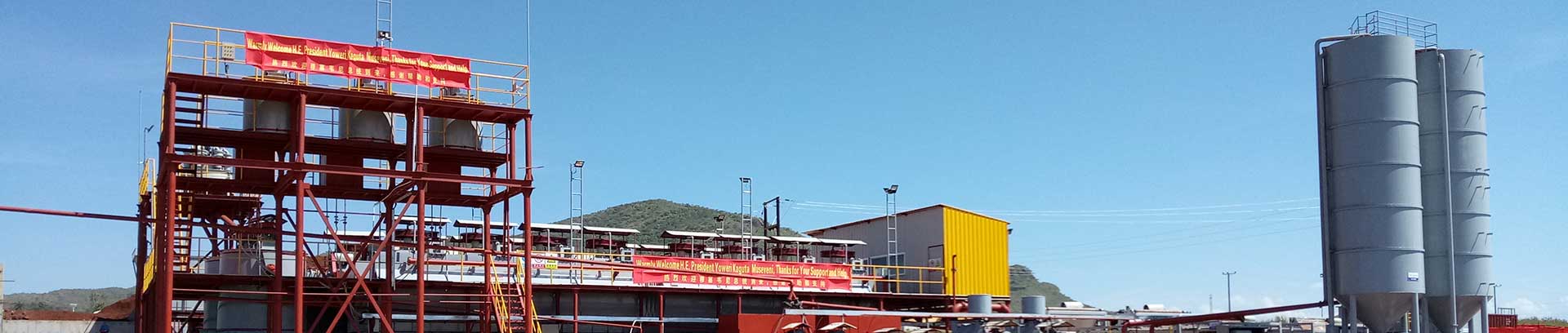
Lead-zinc ores are a key non-ferrous metal resource. Traditional beneficiation typically employs a single flotation process, with the overall flow comprising three core stages: crushing, grinding and flotation.
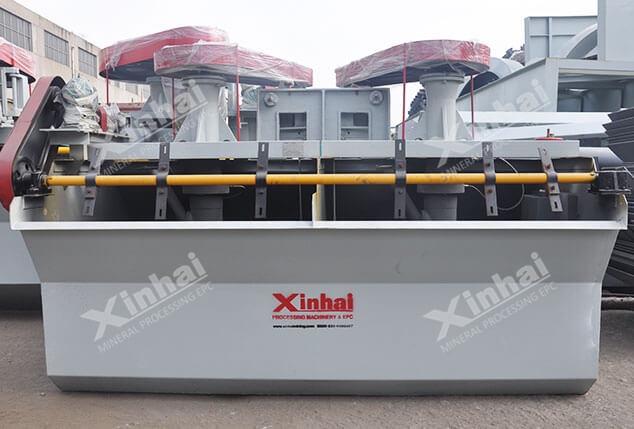
The raw ore first undergoes primary crushing in a jaw crusher, followed by secondary and tertiary crushing in a cone crusher, reducing large ore blocks to a suitable particle size; The material is then fed into a ball mill for grinding, which facilitates the liberation of lead-zinc sulphide minerals from the gangue. The ground slurry is treated with reagents—using xanthate as the collector and pine oil as the frother—and, under the action of aeration and agitation in the flotation cell, the lead-zinc minerals adhere to the bubbles and rise to the surface; after skimming and dewatering, lead and zinc concentrates are produced. However, when dealing with lead-zinc ore characterised by complex mineral distribution and multiple mineral associations, single-stage flotation struggles to balance concentrate grade and metal recovery, resulting in significant resource wastage.
To overcome the limitations of single-process methods, combined mineral processing techniques such as gravity-flotation and flotation-magnetic separation have gradually become the industry standard. Gravity separation utilises differences in mineral density to pre-separate coarse lead-zinc particles and remove large pieces of waste rock at an early stage, thereby reducing the load on subsequent flotation processing; the remaining fine-grain slurry is fed into the flotation system for in-depth separation. These two processes complement each other, effectively enhancing the recovery efficiency of valuable metals. For lead-zinc ore bodies containing associated magnetic impurities, the flotation-magnetic separation combination offers distinct advantages: flotation prioritises the enrichment of lead-zinc concentrate, whilst subsequent magnetic separation recovers the magnetic associated minerals from the ore, enabling the comprehensive utilisation of multi-component resources and significantly boosting the mine’s overall profitability.
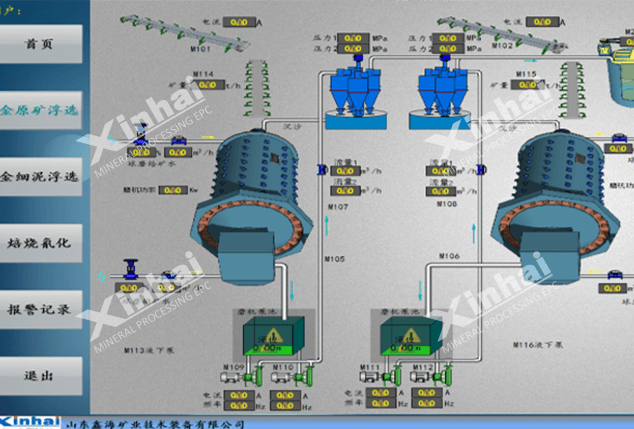
With the implementation of smart manufacturing in mining operations, intelligent mineral processing technologies continue to optimise the entire lead-zinc separation process. Intelligent ore pre-sorting equipment, equipped with high-definition sensors and image recognition technology, precisely removes waste rock after crushing and before grinding, thereby improving the grade of the feed ore and reducing energy consumption and reagent usage during grinding. A comprehensive intelligent control system, utilising multi-point sensors, collects real-time operational data such as slurry concentration, equipment speed and reagent dosage. Leveraging big data and intelligent algorithms, it dynamically adjusts grinding fineness, reagent dosing parameters and flotation agitation speed.
The deep integration of intelligent technology with integrated processing has addressed the shortcomings of traditional mineral processing, yielding significant results in improving the quality of lead-zinc concentrates, reducing production costs and increasing mineral utilisation rates.
Flash flotation specifically refers to the addition of a flotation unit to the classification and sand-settling circuit, with a flotation duration of just 2–4 minutes. This allows for early separation before minerals are overground, directly producing qualified concentrate or rough concentrate.
Currently, the methods for preparing high-purity quartz sand mainly fall into three categories: chemical synthesis using silicon-containing compounds; grinding and processing of natural crystal powder; and deep purification of quartz minerals.
© 2021 Yantai KZ Mining Processing Technology & Equipment Inc.