24-hour service hotline
0086 18733132385
Send us an email
xrguo@xinhaimining.net

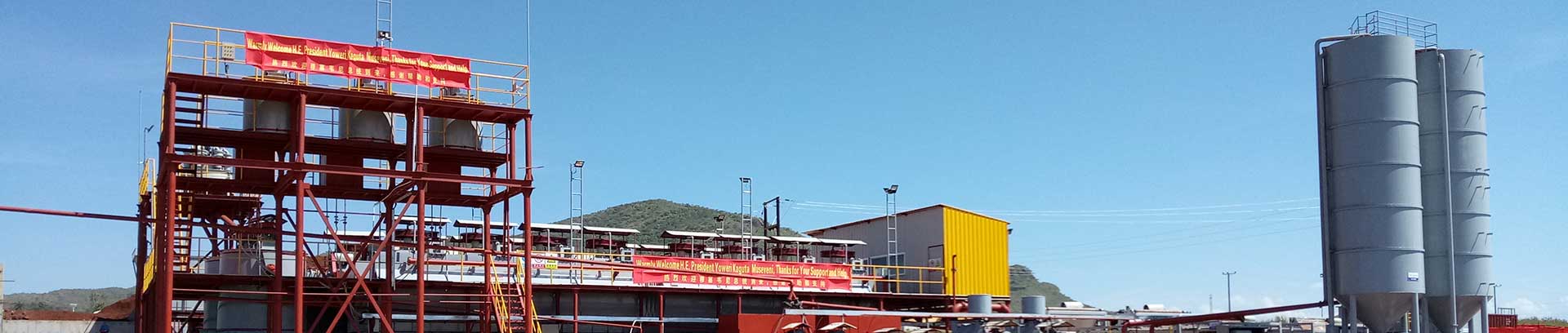
As easily mined and processed gold ore resources continue to be depleted, low-grade, complexly disseminated and difficult-to-process gold ores have become the primary raw material for gold production. Such ores present challenges such as gold particles being encapsulated by sulphide and carbonaceous minerals, severe gangue interference and high leaching reagent wastage. Traditional gold leaching processes suffer from slow reaction rates and low metal recovery rates; coupled with the environmental pressures posed by highly toxic leaching reagents, the development of the industry has been significantly constrained. Consequently, various physical and electrochemical-assisted leaching enhancement technologies have been extensively researched and applied, emerging as the mainstream approach to addressing the challenges of gold extraction from difficult-to-process ores.
Currently, the most widely applied methods for enhancing gold ore leaching are primarily categorised into four main types: electrochemical enhancement, ultrasonic enhancement, ultra-fine grinding enhancement, and intensive agitation enhancement. Each technology improves leaching efficiency by leveraging its own specific mechanism of action.

Electrochemical enhanced leaching regulates the reaction environment through an applied electric field, optimising electrode reactions and interfacial mass transfer processes to accelerate the dissolution rate of gold. This technology allows for flexible adjustment of parameters such as potential and current, making it adaptable to a variety of gold leaching systems. It can also be combined with the use of clean energy, thereby enhancing leaching efficiency whilst meeting green production requirements. At present, the main challenges lie in the numerous side reactions triggered by impurities, and issues regarding equipment corrosion still require optimisation.
Ultrasonic-enhanced leaching relies on the cavitation, mechanical and thermal effects of ultrasound. The instantaneous high temperature and pressure generated by cavitation can disrupt the surface structure of minerals, releasing gold particles from their encapsulating layers; the mechanical action refines the minerals and increases the reaction contact area. Overall, this process shortens leaching time and reduces reagent consumption, making it an auxiliary process that combines environmental friendliness with high efficiency.
Ultrafine grinding is a pre-treatment process that breaks down the crystal structure of minerals through intensive grinding, fully exposing the gold encapsulated within the fine particles and significantly increasing the probability of contact between the gold and the leaching reagents. This process has a remarkable activating effect; however, the finer the grinding particle size, the more pronounced the issues of energy consumption and equipment wear become, and it also tends to increase the difficulty of subsequent solid-liquid separation.
Vigorous agitation in leaching tanks focuses on optimising mass transfer between the gas, liquid and solid phases. This not only increases the solubility of oxygen in the slurry, ensuring a sufficient supply of oxidants for the leaching reaction, but also prevents the settling of mineral particles, allowing reagents to come into full contact with the minerals. At the same time, it promptly removes reaction products, preventing the formation of a passivation layer on the mineral surface. This process is suitable for high-concentration slurry systems; however, issues such as wear on stirring components and relatively high energy consumption during long-term operation require further improvement.
In line with industry trends towards green metallurgy and low-carbon development, various leaching intensification technologies are evolving towards deeper understanding of underlying mechanisms, equipment upgrades, and the integrated coordination of multiple processes. Combining multiple intensification methods tailored to the characteristics of different ores, whilst optimising process parameters and supporting equipment, will become a key development pathway for the efficient and clean extraction of gold from difficult-to-process gold ores.
Currently, the methods for preparing high-purity quartz sand mainly fall into three categories: chemical synthesis using silicon-containing compounds; grinding and processing of natural crystal powder; and deep purification of quartz minerals.
Adopting underground mining technology, Xinhai delivers one-stop full-cycle services for the project, including key underground infrastructure such as shaft construction and ramp development, as well as subsequent mining and ore haulage operations.
© 2021 Yantai KZ Mining Processing Technology & Equipment Inc.