24-hour service hotline
0086 18733132385
Send us an email
xrguo@xinhaimining.net

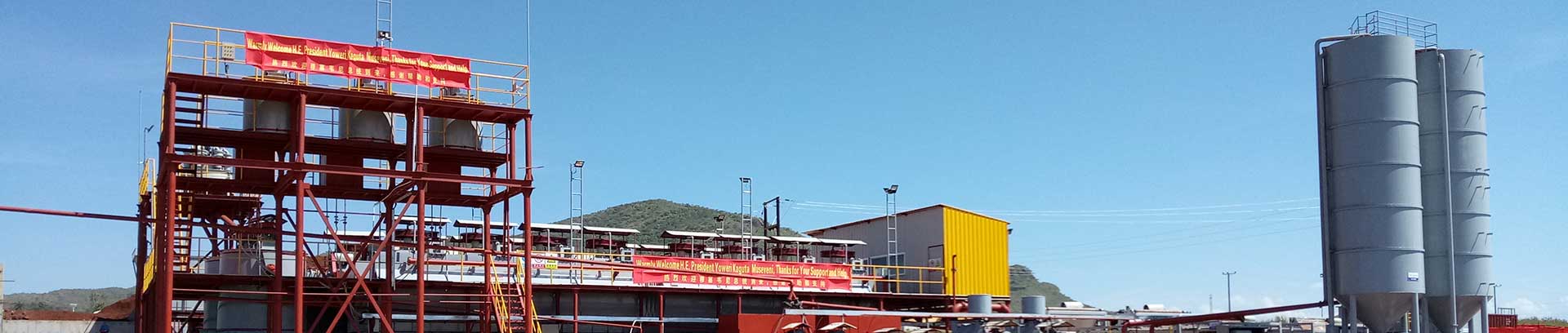
Carbon-bearing, high-sulphur and high-arsenic ores are typical examples of difficult-to-process gold ores. Fine-grained gold is encapsulated within sulphide minerals, whilst the carbonaceous components readily adsorb leached gold, leading to gold entrapment. As a result, direct leaching yields low gold recovery rates, necessitating the use of pretreatment processes to liberate the encapsulated gold. The mainstream pre-treatment methods are categorised into three types: roasting and oxidation, wet chemical oxidation, and bacterial oxidation. The selection is based on a comprehensive assessment of the ore’s impurity composition, environmental constraints and investment costs.
Roasting oxidation is divided into two main branches: conventional high-temperature roasting and microwave roasting. Conventional roasting is highly adaptable, capable of simultaneously removing sulphur, arsenic and organic carbon, whilst rapidly breaking down the sulphide minerals encapsulating the gold. The process is mature and stable, with a low operational threshold, and the by-products possess recovery value. Its drawbacks lie in the fact that high-temperature reactions tend to generate toxic acidic fumes, requiring significant investment in associated flue gas treatment equipment; furthermore, improper temperature control can lead to over-roasting or under-roasting, which in turn reduces gold leaching efficiency. Microwave roasting is an improved process that utilises microwaves to selectively heat sulphide minerals, creating fissures at the mineral interfaces to achieve the dissociation of gold into free form. With its rapid heating rate and lower reaction temperature, it significantly reduces the generation of harmful fumes and features a higher degree of equipment automation, making it suitable for mineral processing projects subject to strict environmental regulations.
Hydrometallurgical pre-treatment involves liquid-phase reactions throughout the process, eliminating the risk of over-roasting; exhaust gas emissions are extremely low. It comprises multiple routes, including atmospheric pressure acid and alkali pre-treatment, hydrometallurgical chlorination, and hot-press oxidation. Atmospheric alkali and acid leaching processes require low capital investment and can be carried out at ambient temperature and pressure, making them suitable for small and medium-sized mineral processing plants; wet chlorination offers strong oxidation capacity and is particularly effective for treating carbonaceous gold ores that are difficult to leach, but the chlorination medium is highly corrosive, resulting in high costs for corrosion-resistant modifications to equipment. Hot-press oxidation carries out the oxidation reaction within sealed high-pressure vessels, offering excellent arsenic and sulphur removal efficiency and significantly reducing the consumption of subsequent leaching reagents. The drawbacks are the substantial initial investment in high-pressure corrosion-resistant equipment and relatively high operational and maintenance costs; it is therefore primarily used in large-scale projects involving difficult-to-process gold ores.
Bacterial oxidation relies on acidophilic microorganisms to decompose sulphide minerals at ambient temperature and pressure. The process is simple, with low capital and operational costs, and offers significant environmental benefits; it also markedly improves gold leachability from the ore following oxidation. The process’s shortcomings include a relatively long reaction cycle and stringent requirements for microbial strain acclimatisation and environmental control; excessive levels of heavy metals such as antimony and lead in the ore can inhibit microbial activity, making it suitable only for high-arsenic, high-sulphur gold ores with a simple impurity composition.
Process selection requires a tiered assessment: for mines with high environmental standards and small to medium-sized operations, microwave roasting or bacterial oxidation should be prioritised; for large-scale mines with complex impurity profiles seeking short-term, high-efficiency processing, thermal-pressure oxidation may be selected; for projects with limited budgets and relaxed environmental regulations, conventional roasting may be chosen; and for ores with high carbon content and moderate arsenic levels, wet chlorination pre-treatment is suitable. Comparative trials of multiple processes may be conducted to determine the most suitable pre-treatment scheme, taking into account the ore’s process mineralogy, the costs of treating the three waste streams, and the scale of project investment, thereby maximising gold leaching recovery rates.
Physical purification of quartz is based on a comprehensive integrated process centred on scrubbing and dispersion, followed by centrifugal classification.The complete physical purification process comprises two core stages: slurry preparation and scrubbing, and centrifugal separation.
Crushing and grinding are the core processes at the front end of barite beneficiation, with the primary objective being to achieve ore liberation, release individual barite particles, and meet the particle size requirements for downstream separation.
© 2021 Yantai KZ Mining Processing Technology & Equipment Inc.