24-hour service hotline
0086 18733132385
Send us an email
xrguo@xinhaimining.net

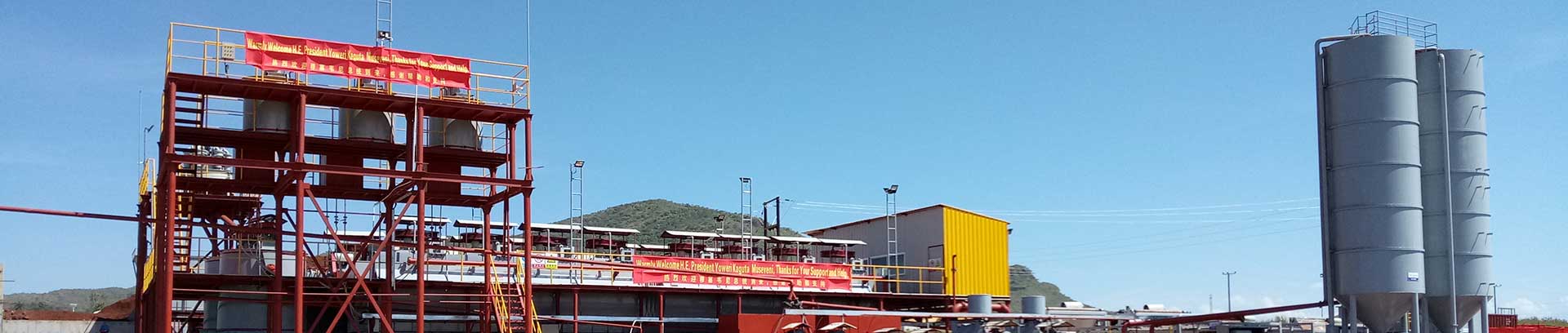
Gold ore occurs in complex forms, and the beneficiation processes suited to free gold, associated gold and low-grade gold ores differ significantly. Currently, the industry-standard gold extraction processes are categorised into four types: gravity separation, flotation, amalgamation and heap leaching. Each process has its own specific applications, operational characteristics, advantages and disadvantages.
Gravity separation relies on the density difference between gold and gangue for separation; it is a classic method of gold extraction characterised by low process costs and the absence of chemical pollution. Through technological advancements, chutes, shaking tables, centrifugal separators and Nelson equipment have been widely adopted in production, making them suitable for the recovery of coarse-grained free gold. However, recovery rates are limited when using gravity separation alone; it is therefore often combined with flotation and leaching processes to enhance overall gold recovery.
Foam flotation is suitable for gold-bearing sulphide ores. The process requires grinding to achieve mineral liberation, followed by the addition of collectors, frothers, modifiers and other reagents. After agitation and foaming, the gold-bearing minerals are separated, with various flotation equipment forming the core of the operation. This process is particularly effective for the separation of fine gold-bearing minerals, and the choice of reagent system directly determines the separation performance.
The amalgamation process targets free, single-particle gold and is divided into two operational forms: internal and external amalgamation; it is often used as an auxiliary separation process. However, as mercury is highly toxic and prone to contaminating water and soil whilst posing a health hazard to operators, comprehensive protective and treatment facilities must be in place on site; its application is now subject to strict environmental restrictions.
The heap leaching process is specifically designed for low-grade, gold-poor ores; the overall process is straightforward and involves low capital costs. The ore is spread in heaps on an impermeable liner and sprayed with a low-concentration cyanide leaching solution; the gold forms a complex with cyanide ions and enters the solution, after which activated carbon is used to adsorb and extract the gold. During production, strict control must be exercised over heap height, temperature and spray rate, whilst the storage and disposal of highly toxic cyanides must be regulated to prevent safety and environmental risks.
In practice, mines rarely employ a single process; instead, they combine different methods according to the properties of the ore, balancing gold recovery efficiency, production costs and environmental control requirements.
Crushing and grinding are the core processes at the front end of barite beneficiation, with the primary objective being to achieve ore liberation, release individual barite particles, and meet the particle size requirements for downstream separation.
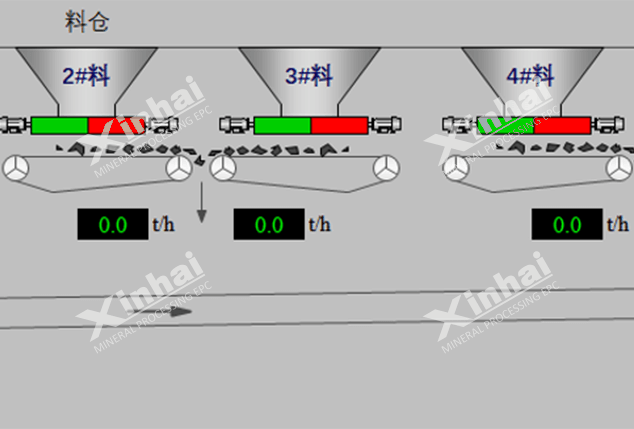
Mechanical automation technology primarily refers to the integration of new technologies—such as computer technology, electronics and intelligent control—into conventional mechanical systems, thereby forming a technical framework capable of operating automatically with little or no human intervention. At present, mechanised automation technology has already been applied in various stages of gold mining and is yielding relatively favourable results.
© 2021 Yantai KZ Mining Processing Technology & Equipment Inc.