24-hour service hotline
0086 18733132385
Send us an email
xrguo@xinhaimining.net

Flotation serves as a pivotal technology for processing diverse gold-bearing ores, finding extensive application in the separation of low-sulphide gold deposits, high-sulphide gold deposits, and polymetallic ores containing gold and silver. This method not only effectively concentrates gold and silver but also enables the comprehensive recovery of multiple valuable metals, significantly enhancing resource utilisation efficiency.
Specific flotation workflows, such as mixed flotation-concentrate separation, stepwise flotation, and priority flotation, must be flexibly tailored to ore characteristics and product objectives. However, for complex polymetallic ores, flotation alone often proves insufficient for direct gold extraction. Consequently, combined processes integrating flotation with other metallurgical methods have become the industry's mainstream approach for enhancing recovery rates and economic efficiency.
This process first obtains a gold-bearing sulphide concentrate via flotation, followed by cyanidation of the concentrate. Its primary advantage lies in avoiding the substantial grinding volume and energy consumption required for whole-slime cyanidation, significantly reducing investment and operational costs while requiring less plant footprint, yielding notable economic benefits.
This method is a key technology for treating refractory gold ores (such as gold-arsenic, gold-antimony, and high-sulphur gold-pyrite ores). Roasting effectively removes harmful elements like arsenic and antimony that severely impede the cyanidation process, fully exposing encapsulated gold and thereby significantly enhancing recovery rates in subsequent cyanidation operations.
For polymetallic sulphide ores containing gold and silver, flotation concentrates these metals within concentrates of closely associated copper, lead, and other metals. These concentrates are directly sent to smelters for pyrometallurgical processing, enabling efficient recovery of gold and silver alongside extraction of primary base metals.
This constitutes an integrated recovery process. Post-flotation medium ore and tailings typically retain substantial gold and silver, necessitating further cyanide recovery. Concurrently, flotation concentrates containing refractory minerals such as tellurides or magnetite require roasting pretreatment prior to cyanidation. This process is particularly suited to complex quartz-sulphide ores.
This process demonstrates its advantages when portions of gold and silver are tightly associated with sulphides and cannot be fully leached by cyanidation. The raw ore undergoes cyanidation to recover readily leachable gold and silver. Subsequently, flotation is applied to the cyanidation tailings to concentrate the precious metals ‘captured’ by sulphides, thereby comprehensively enhancing the overall recovery rate. Currently, highly effective collectors for sulphide ores, such as xanthates and black collectors, are widely employed in the flotation stage.
In summary, flotation serves not only as the core method for concentrating gold and silver but also as the pivotal link connecting multiple metallurgical processes. Through flexible integration with other techniques, it can specifically address the challenges of processing various complex gold ores, achieving optimal economic benefits and technical performance.
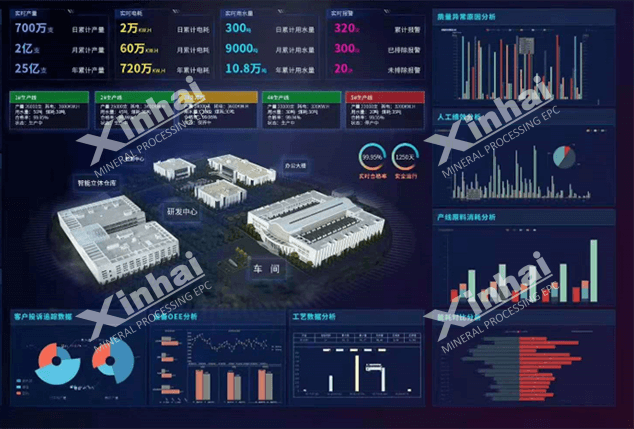
Within the flotation mineral processing sector, traditional operational models are grappling with numerous growing pains. Historically, flotation equipment relied heavily on manual monitoring and adjustment, with operators needing to judge critical parameters such as pulp concentration and pH levels based on experience. This approach not only resulted in delayed responses but also made mineral processing outcomes susceptible to fluctuations due to human error. Simultaneously, manual operation struggles to maintain 24-hour stable production, driving up labour costs, constraining efficiency, and potentially creating safety hazards through operational errors. These pain points have created an urgent industry need for more efficient solutions, giving rise to the automated control system for flotation mineral processing equipment.
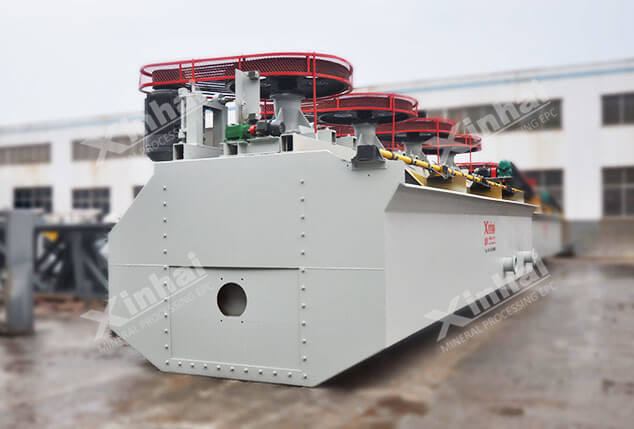
The mechanically agitated self-priming flotation machine is one of the most commonly employed flotation devices in mineral processing plants worldwide. Its core component comprises the agitator's rotor (impeller) and stator system
© 2021 Yantai KZ Mining Processing Technology & Equipment Inc.