24-hour service hotline
0086 18733132385
Send us an email
xrguo@xinhaimining.net

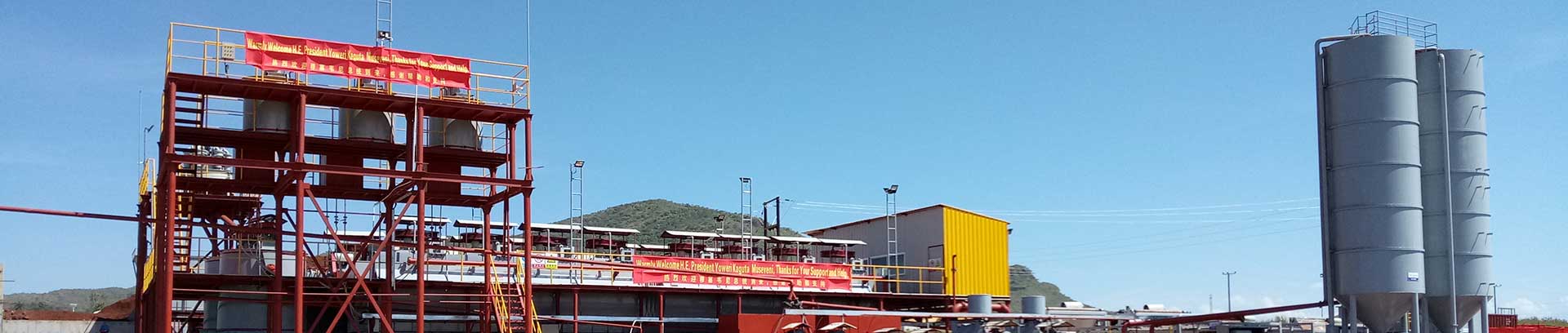
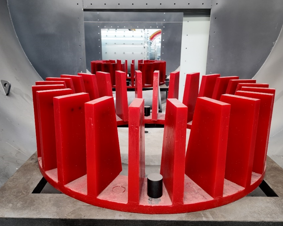
The mechanically agitated self-priming flotation machine is one of the most commonly employed flotation devices in mineral processing plants worldwide. Its core component comprises the agitator's rotor (impeller) and stator system, which performs several vital functions:
(1) Air and slurry aspiration: During high-speed rotation of the rotor, a negative pressure zone forms between the rotor and stator, drawing air in through the air inlet pipe. Simultaneously, it draws in mineral slurry (including feed ore or recycled middlings) via the slurry inlet pipe.
(2) Generating flotation bubbles (foaming): The drawn-in gas is fragmented into minute bubbles by the impeller's rapid rotation, which are then distributed throughout the flotation cell's pulp.
(3) Promoting bubble mineralisation: Mechanical agitation provides sufficient energy to facilitate collisions between hydrophobic mineral particles and bubbles, thereby accelerating the formation of mineralised bubbles.
(4) Creating an optimal three-phase flow environment: Flotation occurs within a gas-solid-liquid three-phase flow field. Mechanical agitation ensures uniform dispersion of mineral particles and bubbles throughout this field. This facilitates easier adhesion of hydrophobic mineral particles to bubbles, forming mineralised bubbles that rise to form froth products. Hydrophilic minerals remain in the flotation cell, achieving mineral separation.
The stator and rotor are indispensable components within the flotation machine. The rotor's rotational speed not only influences the aeration volume but also impacts the separation environment within the flotation cell. Both the air drawn into the negative pressure zone and the mineral slurry are conveyed into the flotation cell via the rotor. As aeration relies on the negative pressure generated by rotor rotation, maintaining an appropriate aeration volume necessitates high impeller rotational speeds. This increases equipment power consumption. Furthermore, impeller wear reduces the generated negative pressure, compromising aeration stability. Consequently, rotors require periodic replacement to ensure uninterrupted flotation operations.
With over three decades of specialised mining machinery production, Xinhai Mining Equipment offers flotation machines in various models. Customised stator and rotor components are also available. Please get in touch with us for further details.
Flotation serves as a pivotal technology for processing diverse gold-bearing ores, finding extensive application in the separation of low-sulphide gold deposits, high-sulphide gold deposits, and polymetallic ores containing gold and silver. This method not only effectively concentrates gold and silver but also enables the comprehensive recovery of multiple valuable metals, significantly enhancing resource utilisation efficiency.
As the primary source of metallic aluminium, the quality of bauxite directly determines the extraction efficiency and production costs of alumina. With diminishing reserves of high-grade bauxite, efficient and economical beneficiation processes have become pivotal to the sustainable development of the aluminium industry. A series of mature beneficiation methods have now been established for different types of bauxite.
© 2021 Yantai KZ Mining Processing Technology & Equipment Inc.