24-hour service hotline
0086 18733132385
Send us an email
xrguo@xinhaimining.net

As the primary source of metallic aluminium, the quality of bauxite directly determines the extraction efficiency and production costs of alumina. With diminishing reserves of high-grade bauxite, efficient and economical beneficiation processes have become pivotal to the sustainable development of the aluminium industry. A series of mature beneficiation methods have now been established for different types of bauxite.
Ore washing serves as the most direct and economical pre-treatment method for bauxite containing high levels of kaolinite and other clay minerals.
Process Objective: Through scrubbing, dispersion, and separation, effectively remove clay impurities, enhance the ore's alumina-to-silica ratio, and provide qualified feedstock for subsequent smelting.
Primary Equipment: Drum washers, trough washers, vibrating screens, etc.
Suitable Ores: Particularly effective for diaspore-type bauxite deposits found in regions such as Henan and Shanxi, China, where ores often exhibit fine grain sizes and close association between aluminium minerals and gangue minerals.
Flotation serves as the core technology for utilising medium-to-low grade bauxite resources, effectively separating gibbsite from gangue minerals such as silicates.
Process Principle: Typically conducted in an alkaline medium, this method employs collectors (e.g., oleic acid, paraffin wax soap) to selectively enrich aluminium minerals, or utilises reverse flotation to remove silica-bearing gangue.
Technical Highlights:
Direct Flotation: Directly floats aluminium minerals, a mature and widely applied technique.
Reverse Flotation: Suppresses aluminium minerals while floating silicates, facilitating higher-grade concentrates and representing the current technological trend.
Advantages: Significantly enhances the Al/Si ratio in concentrates, achieves high recovery rates, and maximises resource utilisation.
Core Process Three: Magnetic Separation and Calcination — Targeted Refining Techniques for Quality Enhancement
Magnetic Separation: Primarily removes iron-bearing magnetic minerals (e.g., hematite, goethite) from ore, reducing iron content in concentrates. Particularly effective for iron removal and purification in bauxite deposits.
Calcination: High-temperature roasting eliminates bound water, organic carbon, and sulphur while altering mineral magnetic properties or floatability, creating favourable conditions for subsequent magnetic or flotation processing. This process is relatively energy-intensive and is typically employed for exceptionally refractory ores.
For bauxite deposits exhibiting intricate mineral compositions and distinctive distribution characteristics, single-method approaches often fall short of achieving optimal specifications. Consequently, combined workflows such as ‘washing-flotation’ and ‘roasting-magnetic separation-flotation’ have emerged. Through optimised combinations of multiple technologies, these processes achieve efficient separation of elements like aluminium, silicon, and iron, representing the future direction for developing low-grade, difficult-to-process bauxite resources.
We possess deep expertise in bauxite beneficiation, offering comprehensive services from mineral analysis, pilot testing, process design and optimisation, to the supply of critical equipment.
Process Customisation: Tailor the most efficient and economical separation scheme based on your ore characteristics (bauxite, gibbsite, or mixed types) and target product specifications.
Technical Assurance: Whether it concerns high-efficiency flotation reagent systems or energy-saving dewatering and drying technologies, our extensive project experience and technical expertise ensure your project achieves optimal return on investment.
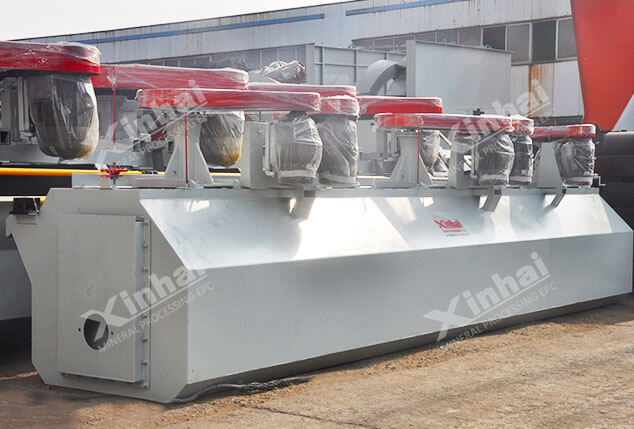
The mechanically agitated self-priming flotation machine is one of the most commonly employed flotation devices in mineral processing plants worldwide. Its core component comprises the agitator's rotor (impeller) and stator system
In phosphate ore beneficiation, flotation reagents are crucial for improving grade and reducing costs. Commonly used types include collectors and defoamers.
© 2021 Yantai KZ Mining Processing Technology & Equipment Inc.