24-hour service hotline
0086 18733132385
Send us an email
xrguo@xinhaimining.net

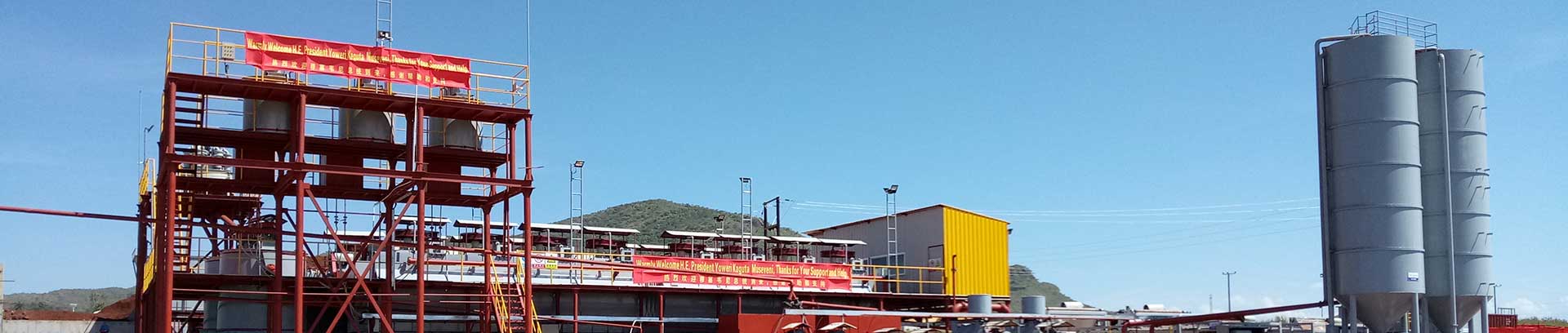
Manganese carbonate is the primary component of manganese carbonate ore and serves as a high-quality raw material for producing manganese sulfate. As a core intermediate in the manganese industry, manganese sulfate is widely used in battery materials, chemical engineering, agriculture, and other fields; the scientific rigor of its production process directly determines product quality and resource utilization. The core process for producing manganese sulfate from manganese carbonate ore comprises three key stages: leaching, purification and impurity removal, and concentration and crystallization. By precisely controlling the parameters of each process step, efficient utilization of low-grade manganese carbonate ore can be achieved.
Leaching is the fundamental process that converts manganese in manganese carbonate into soluble manganese salts. The core principle involves using an acid leaching agent to react with manganese carbonate, causing the manganese to dissolve into the solution. Currently, mainstream leaching processes are primarily divided into direct acid leaching and pre-reduction leaching. Among these, direct acid leaching has become the preferred method for industrial production due to its simple process and stable efficiency.
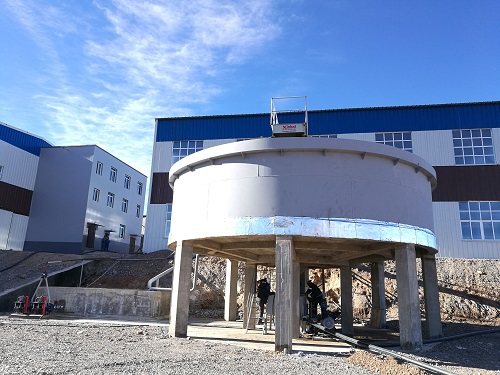
The direct acid leaching method uses sulfuric acid as the primary leaching agent, utilizing the double decomposition reaction between sulfuric acid and manganese carbonate to produce manganese sulfate and carbon dioxide. During the leaching process, parameters such as the acid-to-ore ratio, liquid-to-solid ratio, reaction temperature, agitation speed, and reaction time must be controlled to ensure the efficient dissolution of manganese. A reasonable acid-to-ore ratio prevents incomplete leaching due to insufficient acid or excessive acid that increases subsequent neutralization costs; an appropriate liquid-to-solid ratio and stirring speed ensure uniform mixing of the slurry and promote thorough reaction; and optimizing temperature and time balances leaching efficiency with energy consumption costs. The pre-reduction leaching method is suitable for certain complex manganese carbonates. By pre-adding reducing agents to disrupt the mineral structure, it enhances the leaching efficiency of the subsequent acid leaching stage; however, the process is relatively complex and has limited applications. During leaching, impurities such as iron, aluminum, calcium, magnesium, and certain heavy metals in the ore are also leached out along with manganese, resulting in a complex leachate composition that poses challenges for subsequent purification and impurity removal processes.
Purification and impurity removal are core steps in the production of high-quality manganese sulfate. Targeted separation technologies must be employed to address different types of impurities in the leachate, removing each harmful component individually to ensure the final product meets purity standards.
For iron and aluminum impurities, the leachate must first be treated with an oxidizing agent to convert divalent iron to trivalent iron. The solution’s pH is then adjusted to hydrolyze the iron and aluminum ions into flocculent hydroxides, which are separated via filtration. Common oxidizing agents include hydrogen peroxide and potassium permanganate, which offer high oxidation efficiency and produce no secondary pollution. For potassium and sodium impurities, the potassium ferricyanide method can be employed. Under specific temperature and acidity conditions, potassium and sodium ions react with iron ions to form precipitates, which are then removed by filtration.
The removal of heavy metal impurities such as cobalt, nickel, copper, and lead primarily relies on the sulfide method, chelated sulfide method, or displacement method. The chelation-sulfidation method is currently the most widely used industrial technique. By adding specialized chelation-sulfidation reagents, stable precipitates are formed with heavy metal ions. This method is characterized by high impurity removal efficiency, low reagent consumption, and minimal residue; the displacement method involves adding manganese powder to exploit differences in metal reactivity, displacing heavy metal ions from the solution to achieve purification; For specific harmful impurities such as molybdenum, the adsorption method can be employed. By using specialized adsorbents to selectively adsorb and remove these impurities, the product is ensured to meet the usage requirements of high-end applications such as batteries.
Concentration and crystallization is the final step in converting the purified, high-purity manganese sulfate solution into a solid product. Once the purified manganese sulfate solution meets purity standards, it undergoes concentration, crystallization, separation, and drying to produce manganese sulfate that complies with industrial standards.
The gravity separation process for white tungsten ore is a physical mineral processing method that achieves separation based on the density differences between white tungsten ore and gangue minerals. It offers significant advantages such as a simple process flow, low cost, and environmental friendliness. The density of scheelite is significantly higher than that of gangue minerals such as quartz and calcite, providing a solid foundation for gravity separation.
Electrical automation technology, through core technologies such as multi-sensoring, data analysis, and integrated control, is deeply integrated into the entire gold mine production process. Below are specific application scenarios in gold mine production.
© 2021 Yantai KZ Mining Processing Technology & Equipment Inc.