24-hour service hotline
0086 18733132385
Send us an email
xrguo@xinhaimining.net

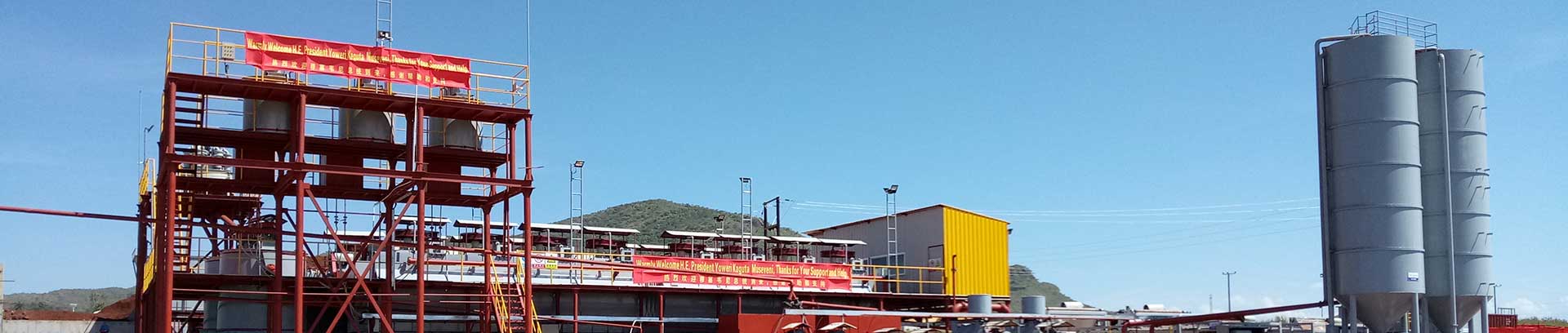
Electrical automation technology, through core technologies such as multi-sensoring, data analysis, and integrated control, is deeply integrated into the entire gold mine production process. It replaces traditional manual operations, improves production efficiency, controls costs, and ensures safety. The following are specific application scenarios in gold mine production, focusing on practical aspects and tailored to actual production needs.
Various mining and processing equipment in gold mine production can be upgraded using electrical automation technology. Taking the high-pressure roller mill (a core piece of equipment in the grinding process) as an example, its automation upgrade can achieve fully automated operation: the front end of the equipment is equipped with a storage bin, buffer bin, and feed hopper, integrating a feeder, speed control belt, conveyor belt, and metal detector. Automatic metering, screening, sorting, and conveying functions are achieved through a PLC automatic control system.
Metal detectors can monitor oversized metal blocks in the feed in real time. Upon identification, they automatically transmit signals to the sorting device to locate the metal blocks and complete their separation and transfer. Speed sensors monitor the speed of the feed belt and conveyor belt in real time, automatically adjusting the feed rate according to the equipment's rated parameters to ensure stable operation. Simultaneously, sensors collect data on heat, voltage, and current during equipment operation. If a fault is detected, the system automatically issues a command to close the feed gate valve, achieving a safe shutdown and avoiding safety hazards. Furthermore, this automation system can interface with the overall gold mine management system to achieve centralized control of equipment operation status and improve the level of integrated equipment management.
An integrated safety monitoring system, built upon electrical automation technology, comprehensively covers the entire gold mining environment, enabling real-time monitoring, remote control, and emergency early warning. Specific applications include:
1. Environmental and Equipment Monitoring: Collects environmental data such as temperature and humidity in the mining area, concentration of harmful gases underground, geological and rock stability, and hydrological conditions through multiple sensors. Simultaneously, it monitors the operating status of equipment such as mining machines and loaders. All data is transmitted to the integrated command center via a wireless communication system and converted into visual charts, facilitating real-time monitoring of production status by management personnel.
2. Real-time Early Warning and Fault Diagnosis: The system compares the collected data with safety indicators in a cloud database. If any abnormal parameters are detected (such as excessive harmful gases or equipment malfunctions), an early warning signal is immediately issued. Management personnel can accurately identify problems based on the warning information and quickly implement emergency response measures.
3. Remote Monitoring and Command: Management personnel can remotely view the overall production situation, equipment operating data, and video footage of the mining area through terminals such as the mine monitoring screen, computers, and mobile apps, enabling remote dispatch and management. In emergencies, command and evacuation instructions can be issued through the remote communication system to ensure mining safety.
Electrical automation technology is deeply applied to the entire gold mine beneficiation process. Through DCS/PLC automatic control systems, coordinated control and optimization are achieved in various stages, including crushing, grinding, beneficiation, concentrate dewatering, tailings conveying, and water systems, improving beneficiation accuracy and efficiency.
For key beneficiation stages such as grinding, flotation, and thickening, specialized optimization control systems are implemented, such as grinding classification optimization systems, SABC semi-autogenous grinding optimization systems, and flotation froth optimization systems. These systems refine optimization standards and improve beneficiation indicators. Simultaneously, a management cloud platform is built to collect various information such as flow monitoring, production statistics, energy management, equipment maintenance, and automatic weighing, generating diverse data analysis charts. This breaks down communication barriers between production and management, optimizes management processes, and reduces operating costs.
Manganese carbonate is the primary component of manganese carbonate ore and serves as a high-quality raw material for producing manganese sulfate. The core process for producing manganese sulfate from manganese carbonate ore consists of three key stages: leaching, purification and impurity removal, and concentration and crystallization. By precisely controlling the parameters of each process step, low-grade manganese carbonate ore can be efficiently utilized.
Carbon-in-pulp (CIP) gold extraction is the mainstream method for gold recovery in cyanide leaching processes. It is suitable for low-grade oxidized gold ores, high-mud content, and difficult-to-process gold ores. Gold recovery is achieved through the selective adsorption of gold-cyanide complexes by activated carbon. However, fluctuations in process parameters during production can easily affect economic efficiency.
© 2021 Yantai KZ Mining Processing Technology & Equipment Inc.