24-hour service hotline
0086 18733132385
Send us an email
xrguo@xinhaimining.net

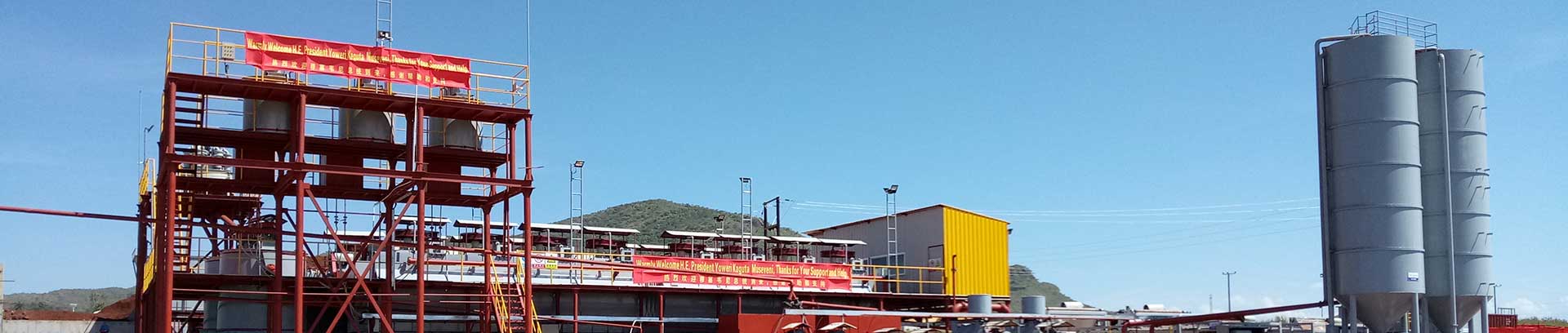
Carbon-in-pulp (CIP) gold extraction is the mainstream method for gold recovery in cyanide leaching processes. It is suitable for low-grade oxidized gold ores, high-mud content, and refractory gold ores. Gold recovery is achieved through the selective adsorption of gold-cyanide complexes by activated carbon. However, fluctuations in process parameters during production can easily affect economic efficiency. This article addresses several of the most common technical challenges in production and provides systematic solutions based on actual production needs, contributing to stable process operation.
Low gold adsorption rate and high tailings grade are the most prominent problems. The gold content in tailings often exceeds the control target of 0.02 mg/L. The core reasons are often activated carbon poisoning and inactivation, abnormal slurry potential, or competitive adsorption by impurity ions. To address these issues, a routine activated carbon regeneration system needs to be established, combining acid washing with thermal regeneration to restore adsorption activity; the slurry potential should be precisely controlled to 180-220 mV, with sodium sulfide added for reduction if it is too high; high-mud ores and ores containing gold ore need to be deslimed in advance or the organic carbon surface should be passivated with kerosene.
Low-grade gold-loaded carbon and high desorption costs lead to increased electrolysis load, stemming from insufficient adsorption stages, unreasonable carbon extraction processes, or excessively high slurry concentration. The adsorption stages should be set to 4-6, with a total adsorption time controlled at 8-12 hours. A carbon management log should be established to quantify carbon extraction volume and frequency. The slurry concentration should be controlled at 40%-45%, and dispersants can be added to improve mass transfer for high-mud ores.
Low desorption efficiency and long cycles of gold-loaded carbon affect subsequent electrolysis processes, primarily due to substandard desorption conditions, imbalanced desorption solution composition, or interference from impurity accumulation. High-temperature, high-pressure desorption can adjust the temperature to 135-150℃ and the pressure to 0.3-0.5MPa. Atmospheric-pressure desorption requires careful control of temperature and reagent concentration. Sodium cyanide and sodium hydroxide should be replenished regularly, and ethanol can be added as a desorption aid. Partial discharge of waste desorption solution should be implemented, and lean carbon should be acid-washed to remove deposited impurities.
Excessive cyanide levels in tailings are a significant environmental challenge, often caused by incomplete cyanide removal reactions and improper reaction condition control. It is recommended to employ advanced cyanide removal processes such as the SO₂/air method or the hydrogen peroxide oxidation method to completely decompose and stabilize complexed cyanide; ensure a residence time of 1-2 hours or more in the cyanide removal tank; strengthen mixing and amplification; and install an online monitoring system to automatically adjust the dosage to ensure compliant emissions.
Carbon-in-pulp gold extraction is a complex system involving multiple interconnected units. The four core indicators are interdependent. Production requires a system-wide approach, establishing a full-process monitoring and material balance model to prevent problems at their source, thereby achieving a dual improvement in gold extraction efficiency and economic benefits.
Electrical automation technology, through core technologies such as multi-sensoring, data analysis, and integrated control, is deeply integrated into the entire gold mine production process. Below are specific application scenarios in gold mine production.
As a rare metal of strategic importance, tungsten requires a multi-stage, refined beneficiation process to ensure its efficient extraction and purification from the ore. The entire process is primarily divided into three core stages: pre-beneficiation preparation, beneficiation operations, and dewatering treatment.
© 2021 Yantai KZ Mining Processing Technology & Equipment Inc.