24-hour service hotline
0086 18733132385
Send us an email
xrguo@xinhaimining.net

As a key strategic resource, lithium is widely used in batteries, electronics, chemicals, new materials and other sectors. With the rapid development of the new energy industry, demand for lithium resources continues to rise, and lithium extraction technologies are constantly being refined. Due to significant variations in lithium oxide content, mineral composition and mineralisation characteristics among different lithium ores, extraction processes must be selected on a case-by-case basis. Currently, the six mainstream industrial methods for lithium extraction are flotation, magnetic separation, gravity separation, hand sorting, thermal cracking, and combined mineral processing.
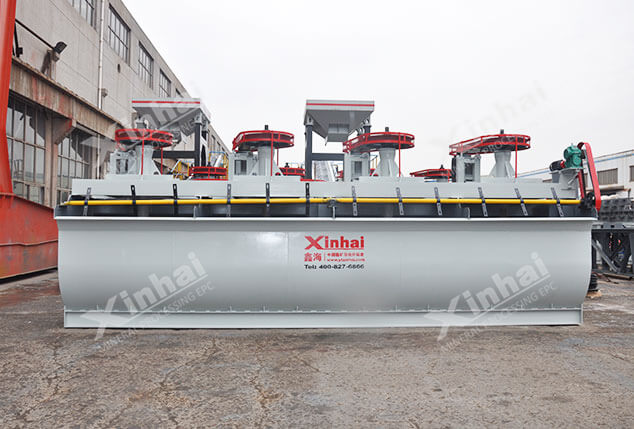
Flotation is the most commonly used method for lithium ore separation. It is suitable for all types of lithium ores of industrial value, with particularly outstanding results for fine-grained disseminated lithium ores. The effectiveness of lithium ore flotation is influenced by factors such as ore properties, grinding fineness, agitation intensity, reagent regimes, and water quality. Lithium minerals with clean surfaces can be effectively floated using collectors such as oleic acid and soap-based agents, and are best processed in a neutral to weakly alkaline pulp environment. Common equipment includes XCF, KYF, JJF, SF and coarse-grain-specific flotation machines, which can meet the production requirements of large, medium and small-scale lithium processing plants.
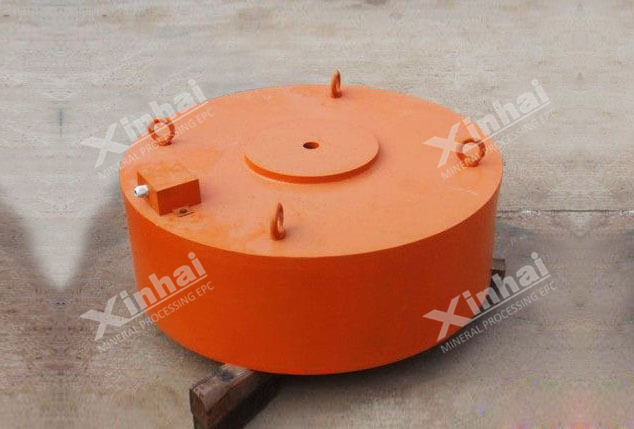
Magnetic separation is primarily used for the purification of lithium concentrates by removing ferromagnetic minerals to improve the quality of the lithium product. Common lithium ores such as lithium mica and spodumene possess weak magnetic properties, whereas associated iron-bearing impurities such as magnetite exhibit a certain degree of magnetism; therefore, strong magnetic separation technology can achieve effective separation. Magnetic separation is generally not used in isolation but is often combined with flotation and gravity separation to form integrated processes. Common equipment includes permanent magnet drum separators, high-gradient magnetic separators and dry rotary magnetic separators, which are suitable for both wet and dry operating environments.
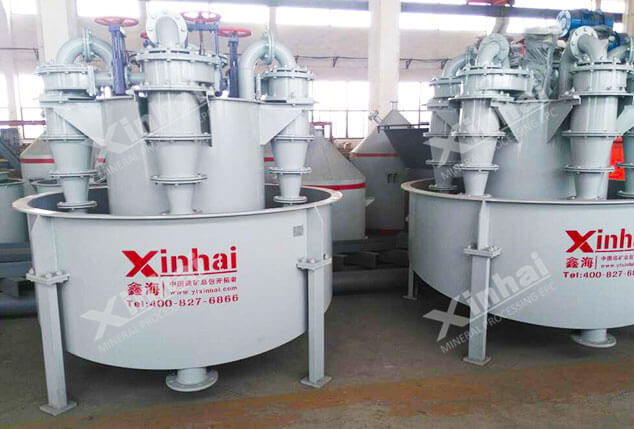
Gravity separation relies on the density difference between spodumene and gangue minerals and is primarily used for the separation of coarse-grained spodumene. When there is a significant density difference between lithium minerals and gangue minerals such as quartz, feldspar and biotite, shaking tables and jigs may be employed; where the density difference is smaller, heavy-medium separation is used. After de-sliming, the lithium minerals are mixed with heavy medium and fed into a heavy-medium hydrocyclone, where separation is achieved under a certain pressure. Common equipment includes shaking tables, jigs and heavy-medium cyclones.
Hand sorting is a simple and effective method of pre-enrichment, primarily used for the pre-treatment of raw ore containing a high proportion of waste rock. By exploiting the distinct differences in colour, lustre and shape between lithium minerals and gangue, operators manually sort and remove waste rock on hand-sorting belts or workbenches to improve the grade of material entering the grinding process. This method requires no complex equipment and is simple to operate; it is frequently used for initial tailings disposal in small and medium-sized mines.
The thermal cracking method, also known as thermal fragmentation, achieves the separation of lithium minerals through phase transitions induced by heating and cooling. It is suitable for spodumene ore containing gangue minerals such as feldspar, calcite and mica. After the ore has been crushed and screened, it is roasted at high temperatures for a specific duration, causing the spodumene to transform from the α-phase to the β-phase, whilst the structure of the gangue minerals remains unchanged. Purification is then achieved through selective grinding, classification and separation. This process requires equipment such as roasting furnaces, ball mills, vibrating screens and classifiers.
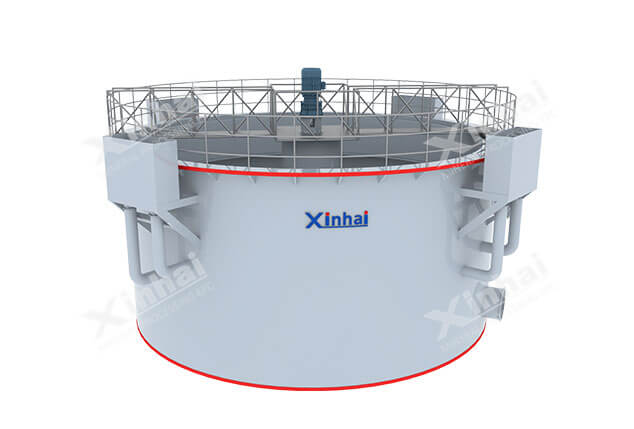
The combined mineral processing method is primarily used to treat low-grade, fine-grained, and complex lithium ores that are difficult to process, and is employed when a single process cannot produce a concentrate of acceptable quality. By combining two or more methods, high-efficiency recovery is achieved. Common combined processes include flotation–magnetic separation and flotation–gravity separation–magnetic separation, which can significantly improve the grade and recovery rate of lithium concentrate. This represents the mainstream technological approach for lithium extraction from complex lithium ores at present.
The iron ore beneficiation process primarily comprises two major systems: crushing and grinding/beneficiation. It employs a combined process of three-stage closed-circuit crushing and staged grinding and beneficiation to achieve efficient ore separation and grade enhancement.
The quality and efficiency of low-grade phosphate ore can be enhanced through physical and chemical methods such as crushing and screening, gravity separation, washing, calcination, acid leaching and flotation. Among these, flotation has become the most fundamental and widely applied industrial technology for processing medium- and low-grade phosphate ore, owing to its high enrichment efficiency and broad applicability.
© 2021 Yantai KZ Mining Processing Technology & Equipment Inc.