24-hour service hotline
0086 18733132385
Send us an email
xrguo@xinhaimining.net

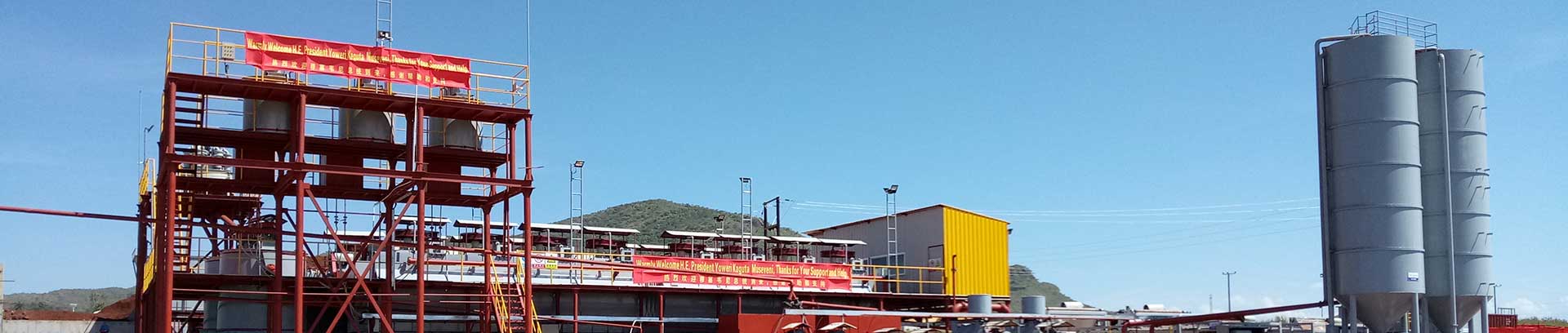
The quality and efficiency of low-grade phosphate ore can be enhanced through physical and chemical methods such as crushing and screening, gravity separation, washing, calcination, acid leaching and flotation. Among these, flotation has become the most fundamental and widely applied industrial technology for processing medium- and low-grade phosphate ore, owing to its high enrichment efficiency and broad applicability. Depending on the type of impurities and the characteristics of mineral distribution, phosphate ore flotation is primarily categorised into four processes: direct flotation, reverse flotation, combined direct-reverse flotation, and double-reverse flotation, each tailored to meet the specific separation requirements of different types of gelatinous phosphate ores.
The direct flotation process is suitable for siliceous and silico-calcareous gel-bound phosphate ores. This process is carried out in an alkaline pulp environment, where the flotability of gangue minerals is suppressed by the addition of inhibitors. This is combined with fatty acid-based anionic collectors to enhance the hydrophobicity of the gel-bound phosphate ore, and with frothing agents to achieve effective separation of phosphate minerals from gangue. This type of ore has a fine grain size distribution, with a significant difference in floatability between siliceous gangue and colloidal phosphate ore. By precisely tailoring the reagent regime, highly efficient separation can be achieved, making it ideally suited for upgrading phosphate resources with high silica and low carbonate content.
The reverse flotation process is primarily designed for calcium-magnesium colloidal phosphate ore, and is particularly suitable for sedimentary phosphate ores with high calcium and magnesium content and low silica content. The process is carried out in an acidic environment. The core principle involves adding inhibitors to lock in the phosphate-bearing minerals, whilst using collectors to enhance the floatability of carbonate gangue such as dolomite and calcite, allowing the gangue to rise with the froth and be removed. The high-grade material retained at the bottom of the cell constitutes the phosphate concentrate, enabling the efficient removal of calcium and magnesium impurities from the ore.
Forward-reverse flotation and reverse-forward flotation are two mainstream combined processes that have effectively broadened the scope of phosphate ore processing. Forward-reverse flotation is primarily used for calcareous-siliceous phosphate ores, where forward flotation is employed first to preliminarily concentrate phosphate minerals, followed by reverse flotation to remove residual carbonate impurities; reverse-forward flotation is suited to siliceous-calcareous phosphate ores, where reverse flotation is used first to remove calcium and magnesium gangue, followed by forward flotation to further purify the phosphate concentrate. This process combines the dual advantages of single flotation processes, resulting in higher separation precision.
Double reverse flotation is specifically designed for mixed-type phosphate ores and is suitable for complex ores with low levels of both siliceous and carbonate gangue. In an acidic environment, oil-based collectors are first used to remove carbonate minerals, followed by aliphatic amine collectors to remove siliceous gangue. By eliminating these two types of impurities in separate stages, high-quality phosphate concentrate is ultimately obtained, delivering excellent separation results for complex, low-grade ores containing multiple co-existing minerals.
Due to significant variations in lithium oxide content, mineral composition and mineralisation characteristics among different lithium ores, the extraction process must be selected on a case-by-case basis. Currently, the six mainstream industrial methods for lithium extraction are flotation, magnetic separation, gravity separation, hand sorting, thermal cracking, and combined mineral processing.
Cyanide leaching is the most widely used core process in gold beneficiation. It primarily utilizes the chemical solubility properties of cyanide to efficiently extract gold from gold ore and gold concentrate. This process is complete, technologically mature, and can be extended to the leaching and recovery of metals such as silver, copper, and zinc.
© 2021 Yantai KZ Mining Processing Technology & Equipment Inc.