24-hour service hotline
0086 18733132385
Send us an email
xrguo@xinhaimining.net

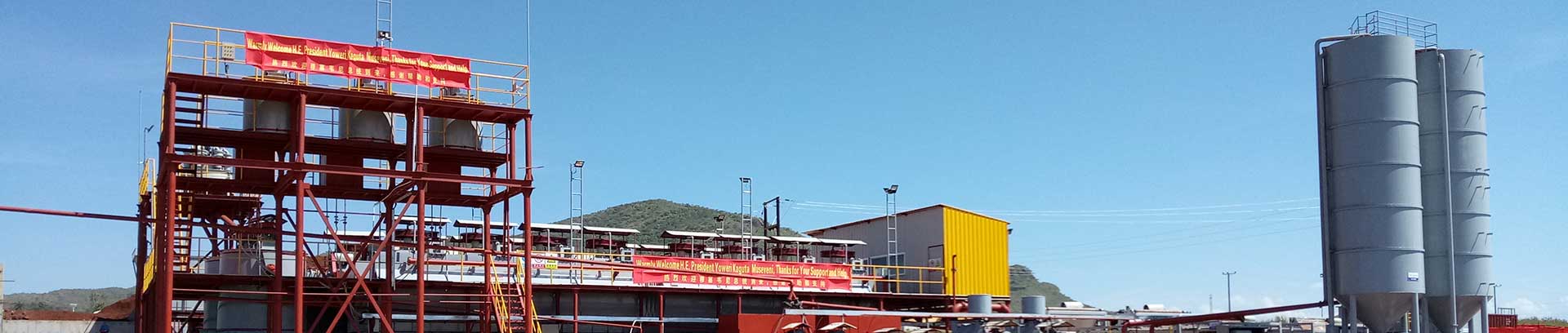
Cyanide gold extraction is the most widely used core process in the field of gold beneficiation. It primarily utilises the chemical dissolution properties of cyanide to efficiently extract gold from gold ore and gold concentrate. Thanks to its adaptability and high recovery rates, it has become the mainstream gold extraction technology in mines both domestically and internationally. The entire process is comprehensive and technically mature, and can also be extended to the leaching and recovery of metals such as silver, copper and zinc.
The complete cyanide gold extraction process is primarily divided into four core stages: cyanide leaching, pulp washing, gold concentration and recovery, and smelting of the final product. These stages are closely interlinked to ensure the efficient recovery of gold. Currently, cyanidation processes in domestic gold mines are primarily categorised into two main systems: the conventional counter-current leaching process and the filterless carbon-in-leach (CIL) process.
The conventional cyanidation process relies on continuous counter-current leaching using a thickener, recovering gold through zinc powder displacement. It comprises two variants—CCD and CCF—and is predominantly used for the treatment of gold flotation concentrates, gravity separation tailings, and mercury-alloyed materials. The filterless carbon-in-leach process, comprising CIP and CIL methods, eliminates the need for slurry filtration and washing. Instead, it utilises activated carbon to directly adsorb gold from the slurry. This process is simpler and is particularly well-suited to the whole-ore cyanidation of silty oxidised ores, offering broader applicability.
Sulphide minerals in the ore release harmful ions such as copper, zinc, iron and sulphur, which consume large amounts of cyanide and dissolved oxygen, severely inhibiting gold leaching. Consequently, ore slurry pre-treatment is a critical preliminary step in cyanide gold extraction. Alkaline pre-treatment is widely adopted in production; it effectively eliminates interference from harmful ions, reduces cyanide consumption, and significantly improves gold leaching rates. Furthermore, once pre-treatment meets the required standards, the duration of the process has minimal impact on leaching efficiency, ensuring high process stability.
During production, pH, leaching time and cyanide dosage are the three core control parameters. The slurry must maintain an appropriate alkalinity to prevent the hydrolysis of cyanide into toxic hydrogen cyanide gas, which would result in reagent wastage and environmental pollution; at the same time, the upper limit of alkalinity must be controlled to prevent excessively high alkalinity from reducing the dissolution rate of gold. Leaching time must be carefully controlled; extending the duration moderately can improve leaching efficiency, but prolonged operation yields only marginal benefits whilst increasing energy consumption and costs. Furthermore, sufficient free cyanide ions must be ensured within the pulp to guarantee the stable dissolution of gold.
To address the shortcomings of traditional cyanidation processes—namely high toxicity, high reagent consumption and long leaching cycles—the industry commonly adds specialised leaching aids to optimise production. High-quality leaching agents can increase the concentration of active oxygen in the pulp, whilst performing a triple function of pulp dispersion, impurity removal and ion chelation. This increases the contact area between gold and cyanide, eliminates interference from impurities, accelerates gold dissolution, and effectively shortens leaching time and reduces reagent consumption.
With the evolution of mineral processing technology, the cyanide gold extraction process has undergone continuous optimisation and upgrading. The addition of oxidants such as pure oxygen can accelerate leaching rates, improve gold and silver recovery rates, and reduce reagent consumption; for copper-gold ores, the adoption of an ammonia-cyanide composite leaching system can efficiently resolve the challenges of gold extraction from copper-bearing ores; and integrated processes combining grinding and leaching operations have further enhanced leaching efficiency. Through these technical optimisations, the cyanidation process has become significantly more environmentally friendly and efficient, making it suitable for gold extraction from a wider range of complex polymetallic ores.
The quality and efficiency of low-grade phosphate ore can be enhanced through physical and chemical methods such as crushing and screening, gravity separation, washing, calcination, acid leaching and flotation. Among these, flotation has become the most fundamental and widely applied industrial technology for processing medium- and low-grade phosphate ore, owing to its high enrichment efficiency and broad applicability.
For copper ores of different compositions and types, such as oxidized copper ores and mixed copper ores, the industry has developed a series of mature separation processes, including flotation-hydrometallurgy, ammonia leaching-sulfide precipitation-flotation, emulsion flotation, and liberation flotation, which can be selected according to the specific properties of the ore.
© 2021 Yantai KZ Mining Processing Technology & Equipment Inc.