24-hour service hotline
0086 18733132385
Send us an email
xrguo@xinhaimining.net

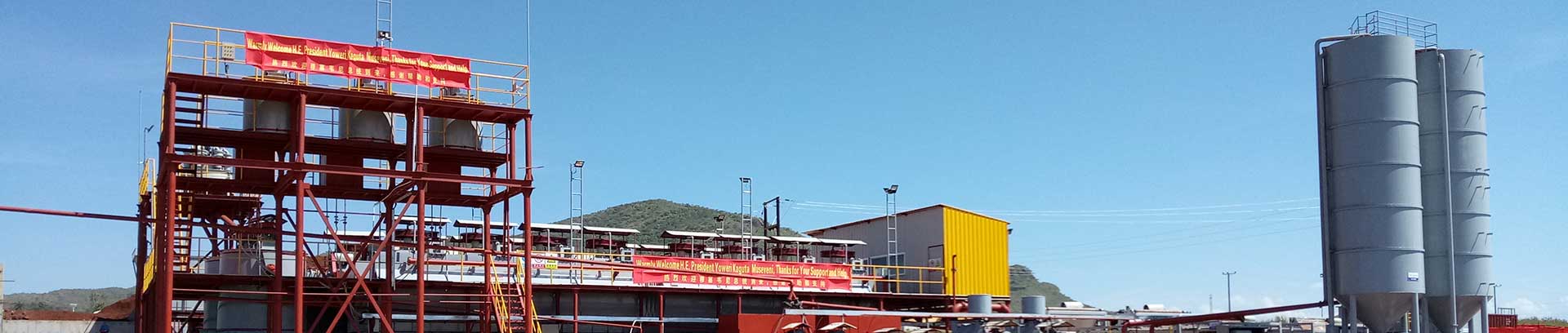
Flotation is currently the most widely used separation method for scheelite, undergoing multiple generations of technological iteration and forming three major development stages.
Heated flotation, also known as the Petrov process, uses a high-alkalinity pulp system for roughing. This process can effectively suppress calcium-bearing gangue minerals, achieving finer and higher-quality scheelite. Its disadvantages include high energy consumption and complex operation. With the development of new ambient temperature flotation technologies, its application scenarios are gradually shrinking.
Ambient temperature flotation flexibly adjusts the reagent regime according to the type of gangue in the ore. When the gangue is mainly composed of silicate minerals, the separation difficulty is lower; if the ore is accompanied by a large amount of calcium-bearing gangue such as calcite and fluorite, the mineral floatability is similar, and the separation difficulty increases significantly. The conventional process is divided into two main stages: roughing and fine cleaning. Water glass is the most commonly used gangue depressant. The lime flotation system represents a significant technological breakthrough in ambient temperature flotation, overcoming the limitations of traditional reagent use. It exhibits strong adaptability to the separation of skarn-type scheelite, relying on the selective adsorption of reagents on the mineral surface to achieve efficient separation of scheelite from calcium-bearing gangue.
Scheelite is brittle, and the crushing and grinding stages easily produce fine-particle minerals. Traditional separation processes struggle to recover these fine particles, leading to resource loss. Therefore, fine-particle flotation technology has gained importance. Hydrophobic agglomeration is the mainstream technical route, mainly divided into three categories: Carrier flotation utilizes coarse-grained carriers to adsorb fine scheelite minerals, improving the flotation efficiency of fine particles; shear-flocculation flotation relies on surfactants and high-intensity stirring to promote the selective agglomeration of the target mineral; and oil agglomeration separation utilizes non-polar oil media to allow fine scheelite to form agglomerates for separation. These three processes effectively address the challenge of recovering fine-particle scheelite, significantly improving the overall resource recovery rate.
Flotation is the core process for separating silver-lead sulfide ores. It enriches associated silver in lead concentrate, simultaneously recovering the main metal and precious metals. Gravity separation is often used for pre-enrichment of coarse-grained minerals, while magnetic separation removes magnetic impurities from zinc concentrate, improving concentrate quality.
During the beneficiation of pyrite, recovery rates often fall short of expectations; the primary reason for this is usually a failure to tailor the separation process to the specific mineral composition of the ore. There are significant variations in the associated impurities, clay content and the occurrence of valuable metals in pyrite from different mining areas
© 2021 Yantai KZ Mining Processing Technology & Equipment Inc.