24-hour service hotline
0086 18733132385
Send us an email
xrguo@xinhaimining.net

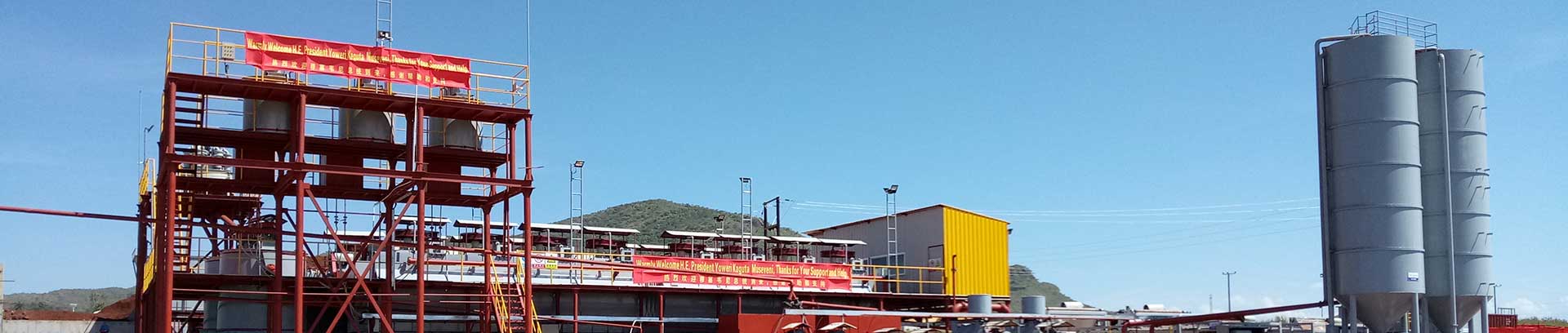
Tungsten is hailed as the ‘teeth of industry’ and is an indispensable strategic metal for cemented carbide, defence manufacturing and high-end equipment manufacturing. In the first half of this year, the tungsten market continued to boom, with the average price of tungsten concentrate rising sharply year-on-year and the market price of black tungsten concentrate reaching a record high.
Amid these favourable market conditions, the key to maximising a mine’s profitability lies in selecting a beneficiation process tailored to the specific characteristics of its ore, thereby enhancing tungsten concentrate recovery rates and product quality. As the mineral properties of different types of tungsten ore vary significantly, beneficiation routes must be designed with these specific characteristics in mind.
Black tungsten ore is characterised by high mineral density and weak magnetic properties; consequently, the industry relies on gravity separation as the core beneficiation method. Relying on differences in mineral density to concentrate coarse-grained tungsten minerals, this is complemented by magnetic separation and flotation as auxiliary refining processes to remove associated magnetic impurities and sulphide minerals. This approach balances low costs with high recovery rates and is well-suited to black tungsten ore bodies with good individual liberation.
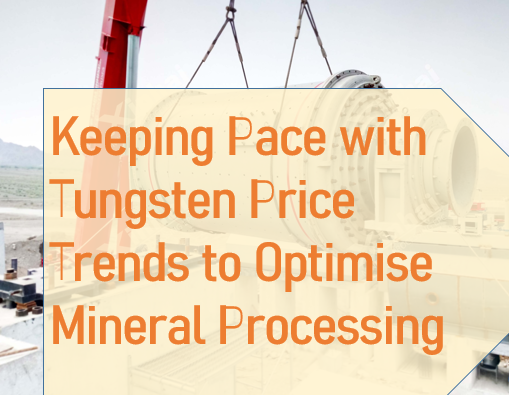
White wolframite has a relatively low density and is often associated with calcium-bearing gangue minerals such as calcite and fluorite. As density-based separation is challenging, flotation is the core process route. By adjusting the reagent system and controlling the pH of the slurry, efficient separation of white wolframite from gangue is achieved. This is complemented by processes such as heated concentration to stabilise concentrate grade and resolve the issue of separation interference caused by calcium-bearing minerals.
Mixed tungsten ore contains both black tungsten and white tungsten minerals; a single separation method struggles to achieve satisfactory recovery rates for both. The industry generally adopts a combined magnetic separation–flotation process or a ‘priority flotation’ synergistic process. This involves first recovering coarse-grained black tungsten via heavy magnetic separation, followed by the recovery of fine-grained white tungsten through flotation. This phased approach enables the simultaneous and efficient recovery of both types of tungsten minerals, thereby fully realising the value of the mineral resources.
During the beneficiation of pyrite, recovery rates often fall short of expectations; the primary reason for this is usually a failure to tailor the separation process to the specific mineral composition of the ore. There are significant variations in the associated impurities, clay content and the occurrence of valuable metals in pyrite from different mining areas
Gold and arsenic often occur in close association; arsenic minerals can encapsulate fine gold particles, which not only lowers the effective grade of the ore but also significantly interferes with the leaching process, resulting in a continuous decline in gold recovery rates.
© 2021 Yantai KZ Mining Processing Technology & Equipment Inc.