24-hour service hotline
0086 18733132385
Send us an email
xrguo@xinhaimining.net

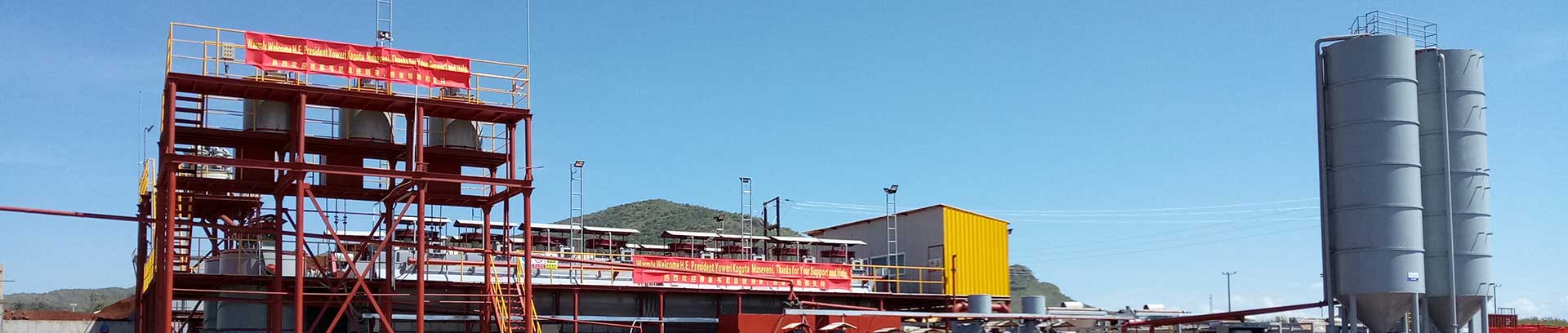
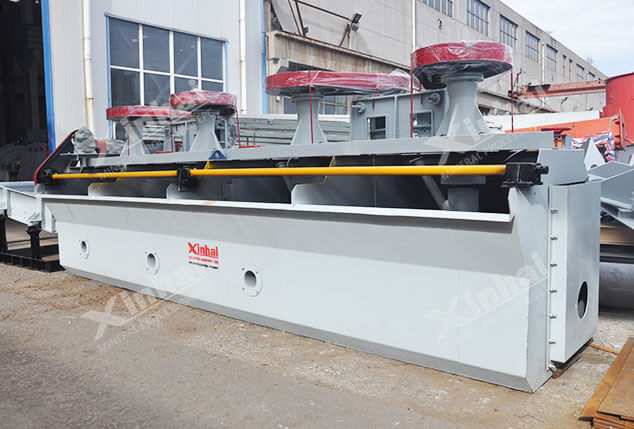
Flotation is one of the most widely applied beneficiation methods in gold processing plants, and it is used far beyond gold. It is the standard route for ores in which gold occurs in highly floatable sulphide minerals, and the concentrate it produces carries the gold into a copper or lead concentrate from which the gold is subsequently recovered. For ores that contain non-ferrous metals alongside the gold, this makes flotation an economically sound choice, because it allows the valuable metals to be exploited as a group while concentrating the gold as far as possible into the sulphide minerals.
Flotation separates minerals by differences in surface chemistry rather than by density. Reagents are added to a conditioned pulp so that the target minerals become hydrophobic while the gangue stays hydrophilic. Air is dispersed as bubbles; hydrophobic particles attach to the rising bubbles and are collected as a froth product, while the gangue settles to the tailings. In a gold circuit the aim is a gold-bearing sulphide concentrate clean and rich enough for the downstream recovery step.
For gold-bearing quartz veins and gold-bearing pyrite-quartz veins, a typical reagent scheme uses xanthate collectors and pine oil as the frother. Flotation is carried out in a weakly alkaline pulp, and the product is a gold concentrate. From that point the flowsheet branches according to what the concentrate contains.
Flotation followed by cyanidation. The flotation concentrate is cyanide-leached; the gold is dissolved as a cyanide complex, the solution is treated with zinc powder to precipitate the gold as gold mud, and the mud is finally smelted to recover the gold. This is a well-established combination for straightforward sulphide concentrates.
Flotation followed by thiourea leaching. For vein gold ores with high arsenic or sulphur content, or with high carbonaceous and slime content, the flotation route yields a gold-bearing sulphide concentrate that is then leached with acid thiourea solution. Thiourea leaching is a low-toxicity alternative that is steadily maturing: acidic thiourea solution dissolves gold and silver quickly, is low in toxicity, and is easy to regenerate. Antimony, arsenic, copper and sulphur minerals interfere with cyanidation but are not sensitive to thiourea, so thiourea leaching can extract gold and silver from ores that cyanidation handles poorly. Leaching times are also generally much shorter than with cyanide.
Flotation followed by roasting, high-acid washing, then cyanidation. When a high-arsenic, high-sulphur concentrate cannot be cyanide-leached directly — the sulphur, iron and arsenic have been concentrated into a refractory product — the concentrate can first be oxidatively roasted to remove arsenic and sulphur. The calcine has a looser, more porous structure, which favours the subsequent leaching of gold and silver. A high-acid pre-treatment wash then dissolves most of the residual impurities so that they can be washed out, protecting the cyanidation recovery and effectively upgrading the gold grade.
In practice, gold flotation is frequently combined with gravity separation. Gravity recovery is placed ahead of flotation to capture coarse liberated gold, with the gravity tailings going to flotation; this suits ores treated by flotation alone, oxidized gold ores, and ores associated with free gold, and it delivers a higher recovery than a single flotation stage. The reverse arrangement — flotation as the main process with gravity on the flotation product — suits ores in which gold is closely intergrown with sulphides and can only be recovered by smelting, as well as quartz vein ores with coarse, unevenly disseminated gold.
There is no universal gold flotation flowsheet. The number of cleaning stages, the grind size, the reagent combination and the position of gravity or leach stages all follow from the ore's mineralogy and the plant's requirements. Testwork on the actual ore is what fixes the flowsheet — the principles above describe the options, not a prescription.
With the rapid development of modern mining technology, intelligent automatic beneficiation systems have gradually replaced traditional manual operation modes. There are essential differences in production stability, operating cost, recovery rate and management efficiency between the two modes, which directly determine the economic benefits and development level of the concentrator.
Manganese ore presents a specific set of difficulties. Most manganese deposits are low grade, and much of the ore is finely or very finely disseminated, with a substantial proportion carrying high phosphorus, high iron, or associated valuable metals. Beneficiation is therefore hard.
© 2021 Yantai KZ Mining Processing Technology & Equipment Inc.