24-hour service hotline
0086 18733132385
Send us an email
xrguo@xinhaimining.net

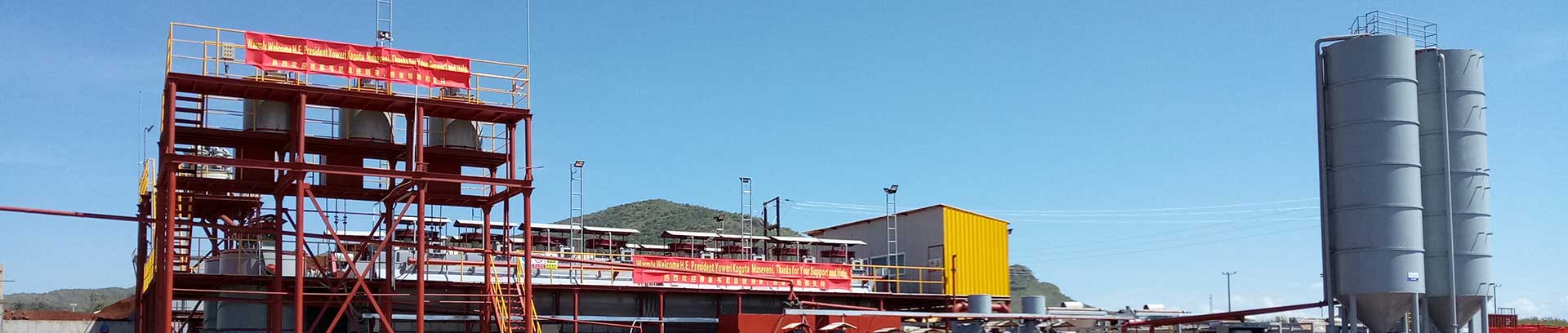
Tantalum and niobium are key rare metal resources with complex ore compositions. Based on their mineral physical properties, they are mainly processed using four processes: gravity separation, magnetic separation, flotation, and combined beneficiation. Different processes are suitable for different ore conditions.
The density of valuable tantalum and niobium minerals is mostly greater than 4.5 g/cm³, while the density of gangue minerals such as feldspar, quartz, and mica is only 2-3 g/cm³, showing a significant density difference. According to gravity separation standards, tantalum-niobium ore is easily separated by gravity. Gravity separation is often used for roughing and pre-enrichment operations, efficiently removing most gangue and achieving good pre-enrichment indicators.
This process relies on the difference in mineral magnetic properties for separation. Tantalum-niobium ore is a weakly magnetic mineral, often associated with magnetite (strongly magnetic), ilmenite, rutile, cassiterite, quartz, and mica. In production, a low magnetic field is first used to remove strongly magnetic impurities such as magnetite, followed by strong magnetic separation to separate tantalum-niobium ore from non-magnetic gangue minerals, thus recovering the tantalum and niobium minerals.
The overall application of flotation for tantalum and niobium ores is limited, with pyrochlore-type niobium ores representing a mature industrial application scenario. Reverse flotation can utilize fatty acid reagents such as oleic acid and sodium oleate. Flotation is suitable for processing fine-grained tantalum and niobium materials that are difficult to recover by gravity separation, and can separate tantalum, niobium, tungsten, and cassiterite with similar properties, but its application is somewhat limited.
Gold extraction from raw ore is a systematic industrial process that transforms low-grade gold-bearing rock and alluvial materials into high-purity bullion. The entire procedure covers crushing, grinding, pre-concentration, separation, leaching and final smelting, ensuring high gold recovery rate and stable production efficiency.
Owing to its advantages of a simple process, minimal capital expenditure on equipment, low energy consumption and low production costs, the heap leaching process has become the mainstream technology for processing low-grade oxidised gold ore (0.3–1 g/t), outcrop ore and tailings, demonstrating outstanding adaptability and economic benefits.
© 2021 Yantai KZ Mining Processing Technology & Equipment Inc.