24-hour service hotline
0086 18733132385
Send us an email
xrguo@xinhaimining.net

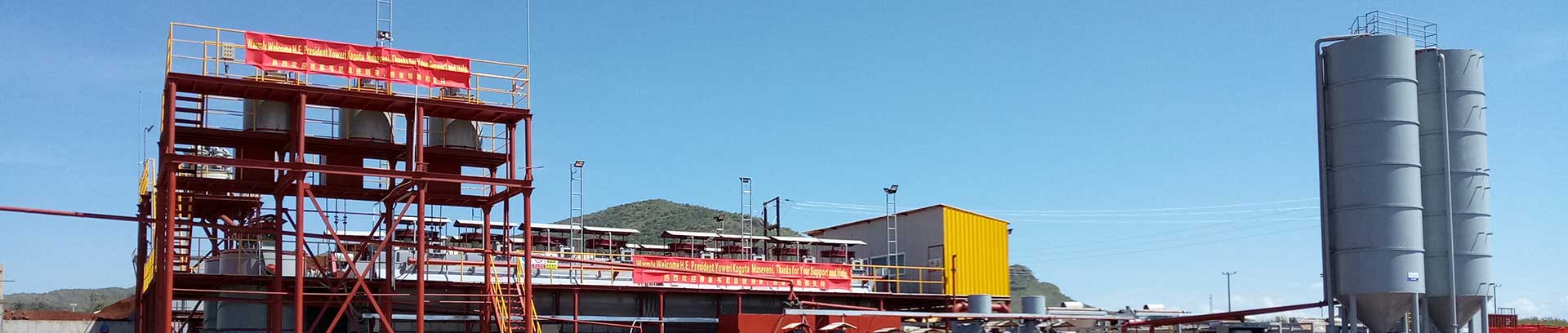
The current sustained rise in international gold prices has significantly enhanced the development value of low-grade gold ores, tailings and other underutilised mineral resources. Against the backdrop of high gold prices and rising mining and beneficiation costs, striking a balance between gold recovery rates and production costs has become a key concern for major mining operations. The heap leaching process for gold extraction, with its advantages of a simple workflow, minimal capital expenditure on equipment, low energy consumption and low production costs, has become the mainstream technology for processing low-grade oxidised gold ores (0.3–1 g/t), outcrop ore and tailings, offering outstanding adaptability and economic benefits.
The complete gold heap leaching production process is divided into seven core stages, with each stage closely linked to the next to ensure gold extraction efficiency and production compliance.
Ore preparation is the foundational stage for improving quality and efficiency. The ore undergoes a two-stage or three-stage closed-circuit crushing process, reducing it to a particle size of 6–30 mm to balance ore permeability with gold liberation. For fine ore and clay-type ores with a clay content exceeding 8 per cent, binders such as cement and lime are added to form granules and solidify the material, thereby preventing caking of the heap and the formation of channels in the leachate flow. At the same time, waste rock and impurities are screened out in advance to further optimise leaching conditions.
The construction of the heap leaching site focuses primarily on environmental protection and impermeability. The site is lined with an HDPE geomembrane of a thickness of ≥1.5 mm, supplemented by drainage channels, blind drains and a liquid collection network, to completely prevent leachate seepage, safeguard the safety of groundwater and the soil environment, and ensure the centralised and efficient collection of valuable leachate.
The ore heaps are constructed using a multi-layer, thin-layer process, with each layer 3–5 metres high and the total heap height controlled between 10 and 30 metres. During construction, the compaction of the ore is strictly controlled to ensure the aeration of the ore heap. Through a system of zoned heaping and sequential leaching, the leaching agent is allowed to come into full contact with the ore.
During the leaching stage, process parameters are precisely controlled. Sodium cyanide or environmentally friendly, low-toxicity agents are used as leaching agents, with concentrations maintained at 100–1,000 ppm. Lime is added to adjust the pH of the ore slurry to 10–11, which not only suppresses the volatilisation of toxic gases and ensures safe production but also enhances leaching efficiency. Liquid application employs an intermittent spraying method, with spray intensity carefully controlled to prevent saturation and water accumulation in the ore heaps.
The collected gold-bearing solution is primarily treated using an activated carbon adsorption–desorption electrolysis process to extract gold; the depleted solution resulting from adsorption can be recycled, effectively reducing the consumption of chemicals and water resources. Finally, the process is concluded through heap washing, testing and heap dismantling, thoroughly removing residual cyanide to meet environmental discharge standards.
The heap leaching process can be flexibly combined with the carbon-in-pulp (CIP) and carbon-in-leach (CIL) methods for synergistic operation. As the properties of ore from different gold deposits vary significantly, actual production requires the customisation of process parameters based on beneficiation tests to maximise resource recovery rates and the economic benefits of the mine.
Tantalum and niobium are key rare metal resources with complex ore compositions. Based on their mineral physical properties, they are mainly processed using four processes: gravity separation, magnetic separation, flotation, and combined beneficiation. Different processes are suitable for different ore conditions.
Ferrous metals primarily comprise mineral resources such as iron, manganese and chromium, and serve as the fundamental raw materials for the steel industry. The mineralogical characteristics of ferrous metal ores vary significantly; the beneficiation requirements for magnetite, hematite, manganese carbonate and chromite differ considerably. A complete beneficiation production line consists of four major equipment modules: crushing, grinding, beneficiation and dewatering.
© 2021 Yantai KZ Mining Processing Technology & Equipment Inc.