24-hour service hotline
0086 18733132385
Send us an email
xrguo@xinhaimining.net

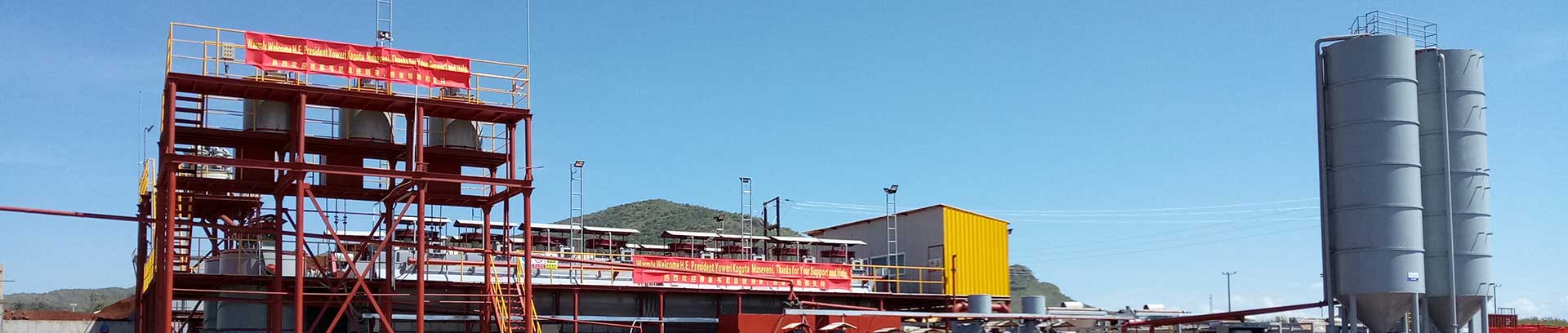
Ferrous metals primarily comprise mineral resources such as iron, manganese and chromium, and serve as the fundamental raw materials for the steel industry. The mineralogical characteristics of ferrous metal ores vary significantly; the separation requirements for magnetite, hematite, rhodochrosite and chromite differ considerably. A complete mineral processing production line comprises four major equipment modules: crushing, grinding, separation and dewatering. The selection of equipment directly determines the grade of the concentrate, the resource recovery rate and the project’s investment costs.
Crushing and grinding form the foundation of the beneficiation process. Jaw crushers and cone crushers carry out coarse, medium and fine crushing operations, processing the raw ore to the appropriate particle size; ball mills and rod mills perform the grinding operations, whilst spiral classifiers and hydrocyclones enable closed-circuit classification, ensuring thorough individual liberation of minerals and preventing interference with subsequent separation caused by over-grinding and slime formation.
Concentration equipment forms the core of ferrous metal beneficiation. Magnetic separators are the most widely used; permanent magnet drum separators are employed for the rough and scavenging separation of magnetite, whilst high-gradient magnetic separators are suited to the recovery of weakly magnetic minerals such as hematite and manganese ore. Flotation-magnetic separators are frequently used for fine concentration and impurity removal, further enhancing the grade of the concentrate. Gravity separation equipment, such as spiral chutes, jigs and centrifugal separators, is suitable for the pre-enrichment of chromite and coarse-grained manganese ore. These rely on physical separation based on density differences and have low reagent consumption. Photoelectric sorting equipment can remove large pieces of waste rock at an early stage, thereby reducing the subsequent grinding load.
The slurry produced after separation requires dewatering. Commonly used equipment includes thickeners, vacuum filters and filter presses to achieve solid-liquid separation of the concentrate, producing a dry concentrate that meets specifications, whilst treated mineral processing wastewater is recycled for reuse.
Ferrous metal ores are complex in nature, and equipment configuration schemes for magnetite, hematite and manganese-chromite ores vary significantly; standard models cannot be directly applied. It is recommended that ore processing trials be conducted during the early stages of the project to select the appropriate equipment package based on ore properties and processing scale, whilst balancing production targets and project investment.
Owing to its advantages of a simple process, minimal capital expenditure on equipment, low energy consumption and low production costs, the heap leaching process has become the mainstream technology for processing low-grade oxidised gold ore (0.3–1 g/t), outcrop ore and tailings, demonstrating outstanding adaptability and economic benefits.
Coarse-grained white tungsten ore is highly adaptable and can be processed using conventional crushing and grinding methods; for fine-grained and disseminated white tungsten ore, the grinding fineness must be strictly controlled to ensure individual liberation whilst avoiding over-grinding, which produces large amounts of slime.
© 2021 Yantai KZ Mining Processing Technology & Equipment Inc.