24-hour service hotline
0086 18733132385
Send us an email
xrguo@xinhaimining.net

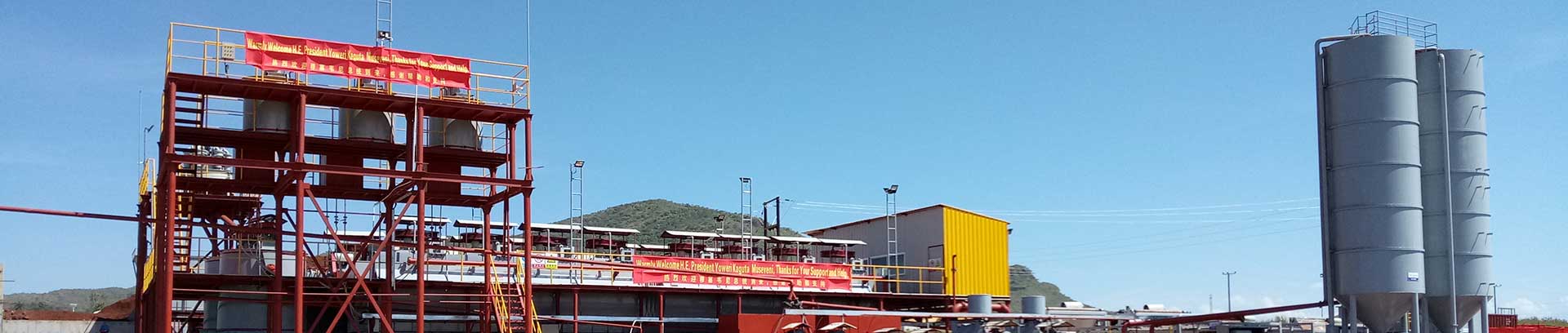
Gold extraction from raw ore is a systematic industrial process that transforms low-grade gold-bearing rock and alluvial materials into high-purity bullion. Due to different ore properties, including placer gold, oxidized gold ore, and sulfide-associated gold ore, modern mining plants adopt targeted beneficiation and refining flows. The entire procedure covers crushing, grinding, pre-concentration, separation, leaching and final smelting, ensuring high gold recovery rate and stable production efficiency.
The first stage of gold processing is crushing and grinding, which lays the foundation for effective mineral separation. Large raw gold ore is delivered to jaw crushers and cone crushers for multi-stage crushing to obtain fine and uniform particles. After screening, qualified materials enter ball mills and hydrocyclone closed-circuit grinding systems to achieve full monomer dissociation between fine gold particles and gangue minerals. This step eliminates coarse particle encapsulation and guarantees optimal conditions for subsequent separation.
For free gold and placer gold resources, gravity separation serves as the most economical and eco-friendly pre-beneficiation method. Leveraging the huge density difference between gold and ordinary rock, centrifugal concentrators, jig machines and shaking tables are applied to recover coarse and medium-sized free gold. Gravity separation requires no chemical reagents, features large processing capacity and low operating costs, and can directly extract high-grade rough gold concentrate while discarding most barren tailings.
For complex sulfide gold ore and fine-grained disseminated gold, flotation technology is adopted for enrichment. Through precise reagent conditioning, gold-bearing sulfide minerals adhere to air bubbles and separate from gangue impurities. Standard flotation flows including roughing, cleaning and scavenging effectively gather scattered fine gold into high-density gold concentrate, greatly reducing the material volume for deep processing and improving overall beneficiation efficiency.
Low-grade gold ore that cannot be enriched by physical separation applies cyanide leaching processes, mainly CIL (Carbon-in-Leach) and CIP (Carbon-in-Pulp) technologies. The ground ore pulp is mixed with environmentally adjusted cyanide solution to dissolve microscopic gold into liquid state. Activated carbon absorbs gold ions from the pulp, followed by elution and electrowinning to obtain high-purity gold mud. This mature technology is widely used in modern large-scale gold mines with a recovery rate up to 90%–97%.
The final procedure is dewatering, purification and smelting. Gold concentrate and electrolytic gold mud are dried and sent to smelting furnaces for high-temperature purification. After impurity removal and refining, crude gold is upgraded into standard high-purity gold ingots that meet industrial and trading standards. Meanwhile, tailings and wastewater are treated and recycled to realize green and sustainable mining operations.
In conclusion, gold extraction is a flexible combination of physical beneficiation and chemical leaching. Reasonable process selection based on ore characteristics can effectively reduce costs, maximize gold resource utilization, and deliver stable economic benefits for global gold mining projects.
The complete fluorite flotation production line adopts a standardized closed-circuit process, covering crushing, grinding, desliming, staged flotation, and dewatering. Each processing link is matched with professional equipment to achieve selective separation between fluorite and gangue minerals, solving the separation difficulty caused by similar mineral surface properties.
Tantalum and niobium are key rare metal resources with complex ore compositions. Based on their mineral physical properties, they are mainly processed using four processes: gravity separation, magnetic separation, flotation, and combined beneficiation. Different processes are suitable for different ore conditions.
© 2021 Yantai KZ Mining Processing Technology & Equipment Inc.